 EN

Body Lotion Tube Packaging: Choosing a Squeeze Tube for Your Product Format
For a body-lotion brand, packaging is part of the product experience rather than a final decoration choice. The right tube needs to hold the intended fill volume, suit the formula’s flow behavior, feel intuitive in the hand, and support a consistent appearance on shelf. When sourcing wholesale lotion squeeze tubes, it is useful to begin with the product format: how much lotion is used per application, where it will be used, and what dispensing action the customer expects.
From a packaging-advisory perspective, the most reliable selection path is simple: define the lotion first, then match capacity, tube body, outlet, and closure through samples. Cosmetic tube suppliers can help translate those priorities into specifications, but the final choice should be verified with the actual formula and filling process.
Start with the lotion’s use pattern, not the tube’s appearance
Body lotions range from light, fast-spreading emulsions to richer creams. A tube that looks suitable may still dispense poorly if its shoulder, diameter, outlet, or cap has not been matched to the formula. Before requesting quotations for wholesale lotion squeeze tubes, define four practical points:
- Formula flow: Is the lotion fluid, creamy, or thick enough that controlled dispensing matters?
- Typical dose: Should the user dispense a small amount for hands or a larger amount for full-body application?
- Use environment: Is the pack meant for travel, a shower shelf, a gym bag, or daily home use?
- Brand interaction: Does the concept call for a quick flip-top routine, a more controlled nozzle, or a premium visual finish?
A common sourcing mistake is to confirm volume alone without also checking the outlet and closure. In sample discussions, look at the full action: opening the cap, squeezing a normal dose, wiping the outlet if needed, and closing the pack again. That process is often more revealing than viewing an empty tube on its own.
Match capacity and diameter to the product format
For wholesale lotion squeeze tubes, capacity affects both commercial positioning and handling. Packaging guides often place body-lotion tubes around 100 ml, 150 ml, and 200 ml, while travel and family-oriented formats can extend from roughly 15 ml to 250 ml. These are planning ranges, not fixed rules. The fill volume must be confirmed alongside the actual tube dimensions and formula density.
Diameter matters because it influences the tube’s profile, panel area, squeeze feel, and how the package stands or stores. Common cosmetic-tube diameters cited in packaging guides include 19 mm, 25 mm, 35 mm, and 50 mm. A narrow diameter can support a compact or travel-oriented format, while a wider body may better suit higher-fill body-care products. Still, a larger tube is not automatically better: it should remain comfortable to grip and easy to dispense from as the product level drops.
| Product-format question | Tube-selection implication |
|---|---|
| Is it a travel or trial size? | Prioritize compact dimensions, a secure closure, and an outlet that avoids mess during repeated opening. |
| Is it an everyday body lotion? | Balance fill volume, one-hand use, and panel space for on-pack information and branding. |
| Is it a richer cream or butter-like lotion? | Evaluate diameter, tube flexibility, outlet size, and dispensing effort with filled samples. |
| Is it a larger family format? | Check shelf stability, cap geometry, handling when partly empty, and transit protection. |
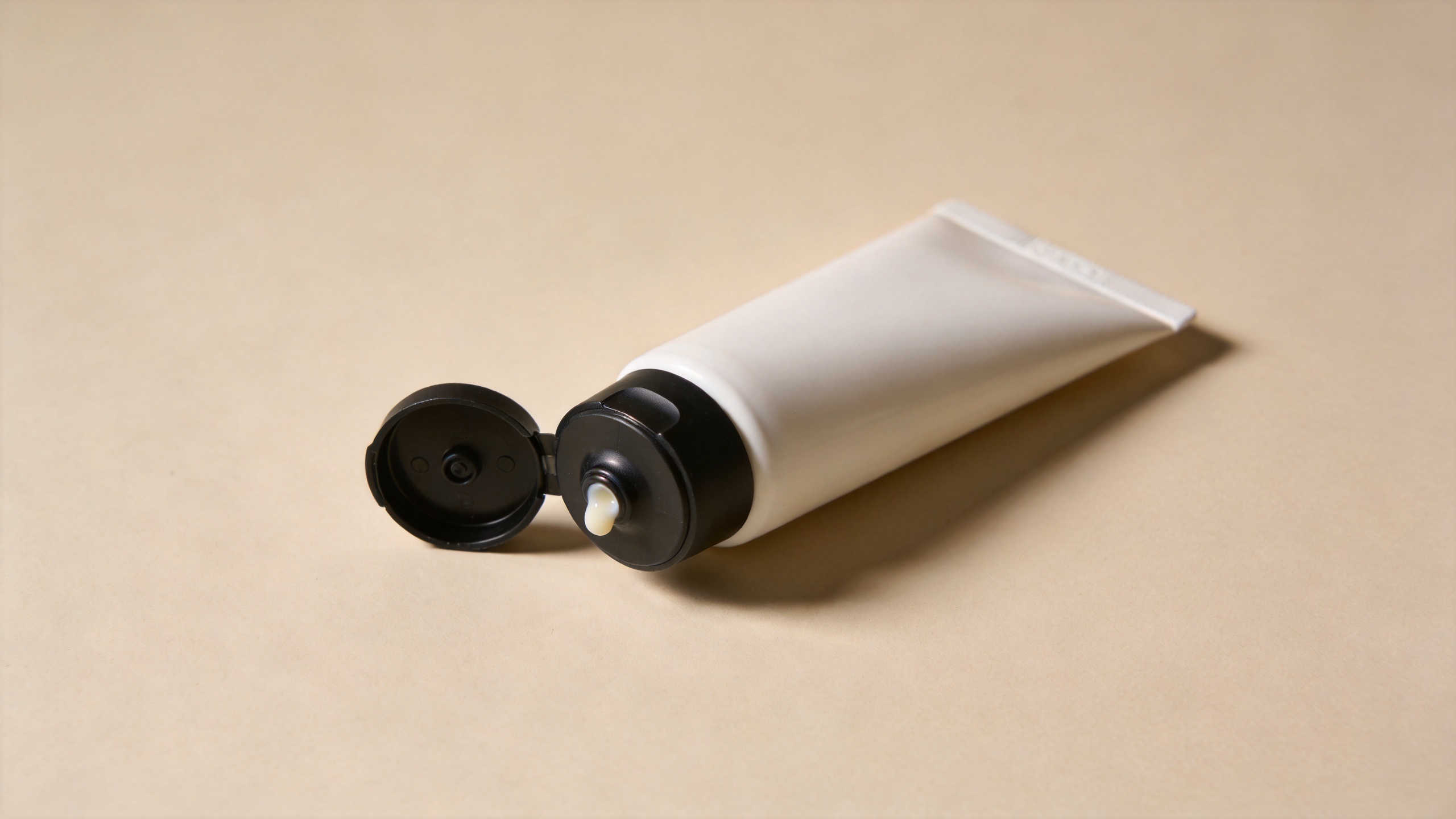
Choose the tube body around compatibility and brand presentation for wholesale lotion squeeze tubes
The tube body performs two jobs: it contains the formula and presents the brand. Material direction, wall construction, decoration, and finish should therefore be considered together. For body care, do not treat a surface choice as separate from the packaging system. If visual texture is a priority, confirm it on a filled production-representative sample rather than assuming the effect will look and wear the same in every filling and transport condition.
When comparing wholesale lotion squeeze tubes, build the specification around questions that a supplier can verify: the intended formula category, fill volume, expected filling method, desired tube diameter, shoulder and outlet style, cap type, artwork requirements, and target order conditions. That gives cosmetic tube suppliers a clearer basis for proposing a workable structure without turning unverified assumptions into product claims.
For example, Baolilai offers a 35mm Aluminum/Plastic Cosmetic Tube with PP Cap for Body Lotions. Use a product option like this as a starting point for a specification conversation, then confirm the final tube-and-cap configuration against your formula, artwork, filling line, and target volume.
Select the outlet and cap for wholesale lotion squeeze tubes
For wholesale lotion squeeze tubes, the cap is not merely a decorative component. It shapes hygiene, portability, dose control, and the user’s perception of ease. Flip-top caps can support fast, one-handed use. Screw caps may suit concepts that prioritize a more deliberate opening action. Other closures or applicator-oriented formats may be relevant when the product needs a more directed application. The suitable choice depends on the lotion’s flow and the intended routine.
In practice, compare cap options through use-case testing. Ask whether the cap is easy to open with wet hands, whether the outlet releases an appropriate amount, and whether residual lotion around the opening is acceptable for the intended price point and retail channel. Cosmetic tube suppliers should be able to discuss available closure options, but only a filled sample can show how the chosen configuration performs with the actual product.
Use samples to verify wholesale lotion squeeze tubes
For wholesale lotion squeeze tubes, compatibility should be treated as a project gate, not an afterthought. Packaging guidance commonly includes formula compatibility, dispensing performance, leakage resistance, cap fit, decoration durability, and shipping performance among the checks to make. For a body-lotion project, ask the team to review the pack in realistic conditions rather than relying solely on an empty-component approval.
- Fill the selected tube with the intended formula or a representative version.
- Assess squeeze force, dose control, outlet cleanliness, and re-closure during repeated use.
- Check the tube body, shoulder, closure, and decoration for visible changes during the agreed evaluation process.
- Review packed samples for handling and transport suitability before confirming a bulk order.
This is where trade-offs become clearer. When visual impact and operational simplicity cannot both be maximized, set the priority early. A package can be attractive, but it still needs to support stable filling, reasonable user handling, and repeatable production expectations.
A concise sourcing checklist for wholesale lotion squeeze tubes
- Formula type and expected viscosity or flow behavior for wholesale lotion squeeze tubes
- Target fill volume and required tube dimensions
- Desired diameter, tube body feel, and shelf orientation
- Outlet style and cap-opening experience
- Artwork, print, and finish requirements to discuss with cosmetic tube suppliers
- Sample checks for compatibility, dispensing, closure fit, and transit handling
- Requirements for batch consistency and specification confirmation with cosmetic tube suppliers
Choosing wholesale lotion squeeze tubes becomes more straightforward when the product format leads the conversation. Start with the formula and daily use case, narrow the capacity and body format, then validate the tube-and-closure system with samples. This approach helps personal-care brands turn packaging from a visual idea into a better-defined, more testable purchasing decision.