
 EN

Cosmetic Tube Sizes Explained: Matching Capacity and Diameter to Product Use
For a cosmetic packaging OEM project, tube size is more than a capacity number. It shapes how the product feels in hand, how the formula dispenses, how much label space is available, and whether the pack suits a travel, retail, or family-use routine. From a packaging-advisor perspective, the useful starting point is to match the formula, brand position, and filling method before choosing a diameter.
A short, narrow tube may be right for a targeted serum or lip product, while a broader tube can make a daily cleanser or body lotion easier to dispense. The goal is not to chase one “standard” size. It is to build a specification that fits the product-use moment and can be verified during sampling.
Start with the product-use moment, not the tube alone
Cosmetic tube dimensions work well when they reflect how often, where, and how much product a user applies. For a cosmetic packaging OEM brief, capacity, diameter, shoulder, cap, and tube length should be considered together. A change in diameter can alter the tube’s proportions even when the nominal fill volume stays the same.
In general, smaller formats suit products applied in small doses or carried frequently. Mid-size tubes are common for everyday facial-care routines. Larger formats make sense when the consumer uses more product per application or shares the product at home. Published sizing guides commonly place face creams and moisturizers around 30–50 ml, while body lotions and scrubs often sit around 100–150 ml. These are planning ranges, not universal rules: formula density, headspace, tube geometry, and the selected closure all affect the final fill specification.
Use capacity as a first filter in cosmetic packaging OEM briefs
| Typical use case | Useful planning range | What to confirm |
|---|---|---|
| Eye cream, spot care, lip treatment | 3–15 ml | Dose control, applicator or small-orifice compatibility, portable format |
| Serum, primer, travel cleanser | 15–30 ml | Formula flow, cap style, travel-size positioning, artwork area |
| Face cream, facial cleanser, sunscreen | 30–100 ml | Daily consumption rate, squeeze force, closure convenience, retail shelf presence |
| Body lotion, scrub, hair mask | 100–200 ml or more | High-volume dispensing, wider opening, grip, filling process, shipment protection |
The table is a framework rather than a catalog. A rich 50 ml cream may need a different opening and wall feel from a 50 ml gel cleanser. Likewise, a 100 ml sunscreen designed for travel may prioritize compact proportions, while a 100 ml body-care product may prioritize easy one-handed dispensing.
For cosmetic packaging OEM, match diameter to formula behavior and brand proportions
Diameter influences both usability and visual balance. As a practical illustration, market guides often associate about 50–100 ml with a 30 mm tube, about 80–150 ml with a 35 mm tube, and about 120–200 ml with a 40 mm tube. Actual capacity still changes with tube length, shoulder design, material construction, and the tolerance agreed for production.
For thinner liquids, a diameter and orifice that prevent over-dispensing may matter more than maximizing the front panel. For thicker creams, scrubs, or masks, a wider body and appropriately matched opening can reduce the effort needed to squeeze out product. It is easy to focus first on a large printable panel; however, the better order is to confirm formula compatibility and filling conditions, then refine decoration and shelf appearance.
- Narrow diameters support compact, targeted, and trial-size formats, but limit artwork and may require careful closure matching.
- Mid-range diameters often balance daily-use comfort, readable graphics, and broad facial-care applications.
- Wider diameters are useful for higher-volume or more viscous products, where handling and dispensing ease deserve priority.
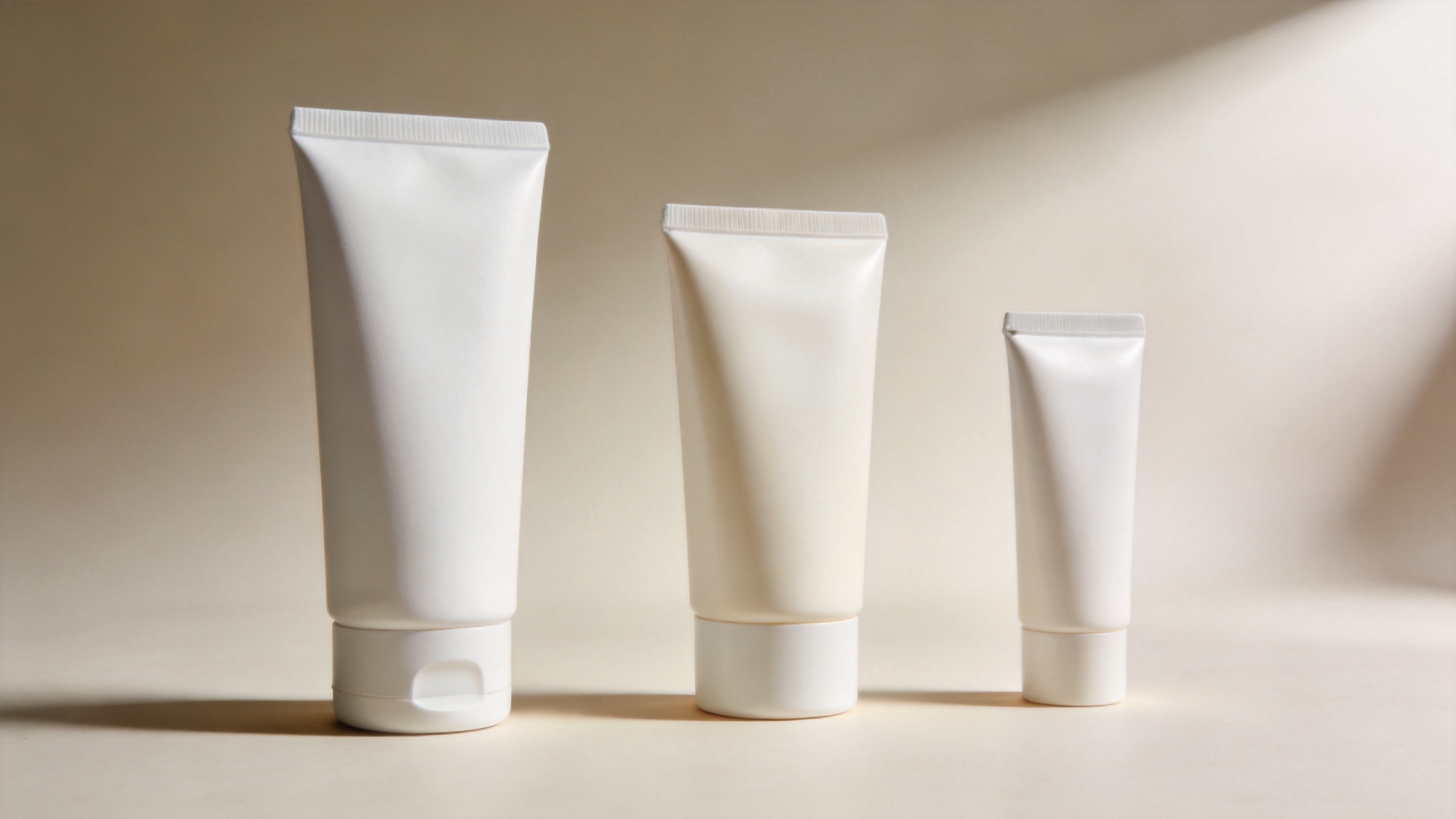
Cosmetic packaging OEM examples: cleanser, sunscreen, and body lotion
Facial cleanser
Cleanser projects often need a size that feels substantial enough for routine use without becoming awkward around a sink. A 50–100 ml planning range is common, and a 30–35 mm diameter can be a useful discussion point. The final choice should account for whether the formula is a low-viscosity gel, a foam cream, or a denser paste, because each will behave differently through the selected opening.
Sunscreen
Sunscreen may be designed as a handbag, travel, or everyday family product. For a smaller personal format, a narrower tube can reinforce portability. For regular-use sunscreen, a mid-size or wider tube can make repeated dispensing easier. Confirm the cap and nozzle with the actual formula, especially when clean application and controlled output are part of the brief.
Body lotion and hair mask
These products usually involve larger application quantities. Higher-capacity tubes benefit from a proportion that is stable in the hand and compatible with the filling line. A wider diameter can be appropriate, but it should be checked with closure torque, product viscosity, artwork layout, and carton dimensions before approving the production specification.
Build the size decision into a cosmetic packaging OEM sampling process
For a cosmetic packaging OEM program, the most reliable size decision is made through a short specification-and-sample loop. Provide the target fill volume, formula type, expected viscosity range, intended market, and preferred cap or applicator. Then review physical samples for squeeze feel, dispensing control, leakage resistance, panel appearance, and how the tube sits in a retail or shipping configuration.
- Define the intended use frequency and dose per application.
- Set a provisional capacity range rather than fixing an exact tube too early.
- Select diameter and length combinations that give workable proportions.
- Confirm material, opening, cap, and filling compatibility with samples.
- Lock artwork only after the printable area and structural version are agreed.
Baolilai’s confirmed range includes ABL, PBL, and PE cosmetic tubes from 3 ml to 300 ml and diameters from 12.7 mm to 60 mm. For teams comparing size options, the custom cosmetic tube range for 3–300 ml applications can serve as a starting point for a capacity-and-diameter discussion. A 35 mm option is also represented by this 35 mm aluminum/plastic tube for cleanser, sunscreen, and body-lotion packaging.
A cosmetic packaging OEM checklist before confirming tube dimensions
- Is the capacity aligned with the intended usage period and price position?
- Does the diameter suit the formula’s viscosity and desired dispensing control?
- Are the cap, nozzle, shoulder, and tube material being evaluated as one system?
- Is there enough printable area for mandatory information, multilingual copy, and brand graphics?
- Has the team tested filling, leakage, appearance, and shipment handling on physical samples?
Cosmetic tube size selection becomes much clearer when it follows the product-use scenario. For a cosmetic packaging OEM brief, start with the amount consumers need, use diameter to support formula performance and handling, and validate the finished combination with samples. That approach gives cosmetic tube suppliers, brand teams, and packaging buyers a more dependable path from an initial concept to a production-ready specification. Cosmetic tube suppliers can make the discussion more efficient when they review the formula, nominal fill, intended market, closure preference, and artwork requirements together rather than treating the tube body as an isolated component.