 EN

Custom Printed Toothpaste Tubes: What OEM Buyers Need to Prepare
For an oral-care OEM, a custom tube project moves faster when the request is more than a logo and a target price. A reliable brief connects formula, fill volume, tube structure, decoration, closure, artwork, sampling, and delivery expectations. That is especially important when a team is also evaluating a 3d printed toothpaste cap as a concept model or a pre-production fit-check. A prototype can help a team review shape and opening ergonomics, but it does not replace validation of the final production cap, tube shoulder, and filling process.
From a tube-specification communication perspective, the practical goal is simple: give the supplier enough information to quote the right construction and make a sample that answers the real production questions. OEM buyers should avoid treating capacity, cap choice, printing, and filling as separate decisions. They influence one another.
Start With the Product and Filling Brief
Begin with the toothpaste itself. Share the intended formula type, target net fill, product viscosity range if available, filling method, and intended market. You do not need to disclose proprietary formula details to start a packaging discussion, but the supplier needs enough context to flag packaging questions that require testing.
State the fill volume in grams or milliliters, then identify any space constraints for the retail pack. In the broader tube-packaging market, capacities can span roughly 10–200 ml; that range is only a reference point, not a production recommendation. The right diameter and length must be confirmed against the formula, the desired shelf presence, and the actual filling line.
- Product: toothpaste type, formula characteristics relevant to compatibility, and target user positioning.
- Fill: nominal fill quantity, allowable tolerance, and expected headspace approach.
- Filling: line format, filling orientation, sealing method, and any known speed or handling constraints.
- Market: language versions, mandatory copy, and distribution conditions that may affect the artwork or pack configuration.
A common mistake is to approve a tube size from a visual mock-up and only later ask whether the shoulder, cap, and headspace work with the fill. It is more efficient to confirm those items together before artwork release.
Define the Tube Specification Before Finalizing Graphics
For custom printed toothpaste tubes, an RFQ should name the preferred tube material or leave it open for recommendation, then clearly list the decisions that need confirmation. Common discussion points include laminate or plastic tube direction, diameter, length, shoulder style, nozzle/orifice requirement, tail finish, surface finish, and decoration method.
| Specification item | What the OEM buyer should provide | Why it matters |
|---|---|---|
| Capacity and dimensions | Target fill and any maximum pack dimensions | Supports a workable diameter/length proposal rather than a purely visual selection. |
| Tube construction | Preferred material direction, barrier needs, and sustainability priorities | Allows the supplier to discuss suitable tube options without claiming unverified compatibility. |
| Shoulder and nozzle | Desired dispensing feel and opening requirements | Helps align product flow, user experience, and cap fit. |
| Surface and print | Gloss or matte direction, colors, finishes, and reference samples | Sets an actionable print-development starting point. |
| Tail and secondary pack | Seal appearance, batch-code area, cartons, and shipper expectations | Prevents late changes that affect layout or packing operations. |
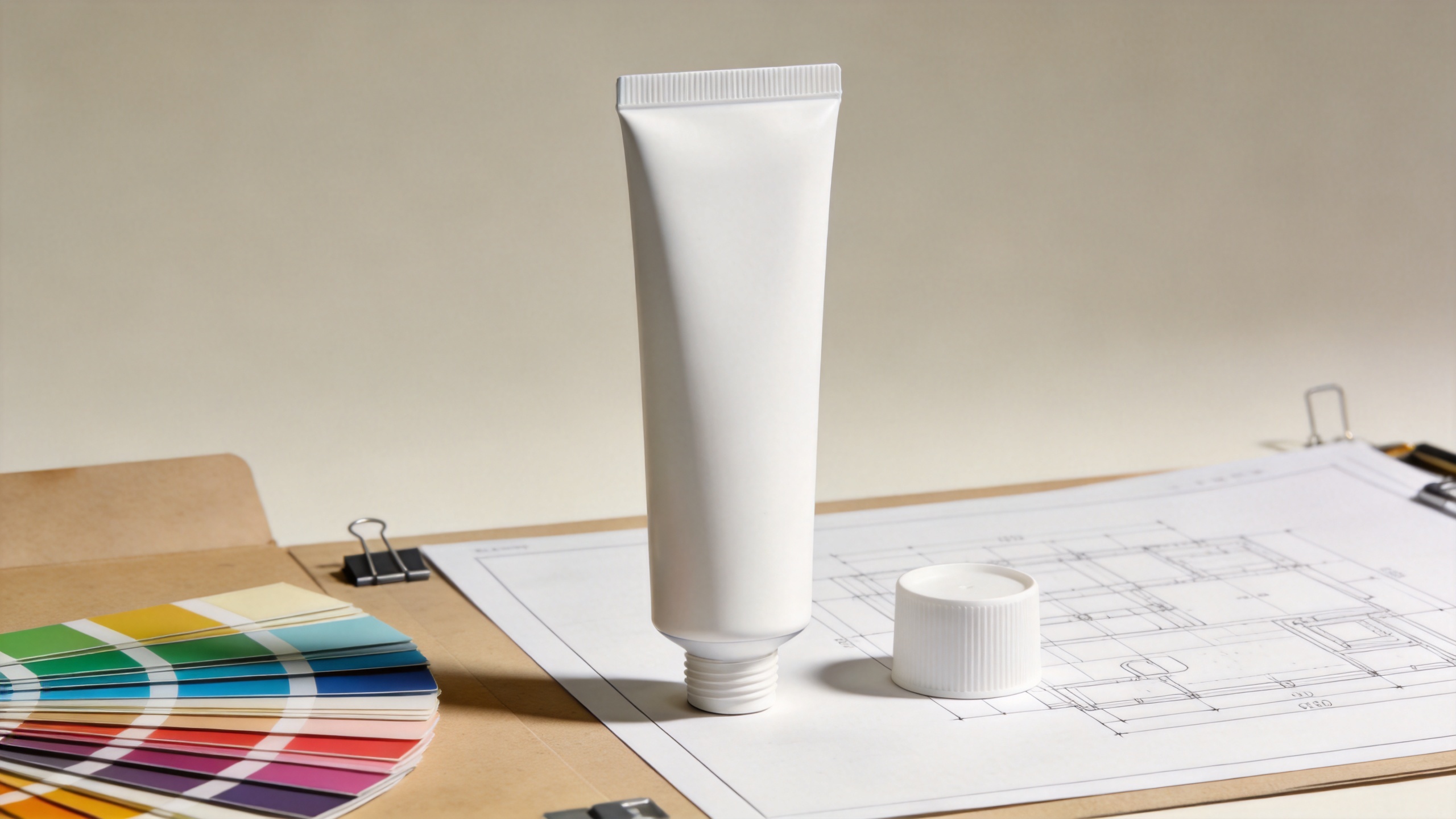
When evaluating an existing format, buyers can use a product such as customized printed ABL toothpaste packaging tubes as a discussion reference for capacity direction and print layout. The final specification should still be documented and approved for the individual project.
Clarify What a 3d Printed Toothpaste Cap Is For
The assigned keyword, 3d printed toothpaste cap, needs careful handling in an OEM brief. A 3d printed toothpaste cap is useful when a brand wants to inspect a new cap silhouette, grip detail, opening position, or approximate assembly before committing to production tooling. For a design review, the 3d printed toothpaste cap can let marketing, product, and procurement teams compare proportions before final artwork and production tooling are released. It can support early design conversations and help internal teams align on the pack experience.
However, a 3d printed toothpaste cap should be labeled as a prototype or concept sample unless its material, thread or snap geometry, torque behavior, leak resistance, and production process have been separately validated. A 3d printed toothpaste cap may show visual intent or approximate fit, but it is not automatically a substitute for a production closure sample. The production closure must be tested with the selected tube shoulder and the filled product. If cap security is the priority, ask the supplier to define the final approval method instead of assuming a prototype demonstrates mass-production performance.
- Provide a cap reference, drawing, or physical sample if one exists.
- Explain whether the 3d printed toothpaste cap is for visual review, fit review, consumer research, or a functional test; this defines the sample criteria.
- Confirm the closure style: screw cap, flip-top, or another documented option.
- Ask for the production-cap specification and the planned tube-and-cap validation steps.
- Approve the final closure only after the relevant sample and filling conditions are reviewed.
Prepare Print-Ready Artwork and Mandatory Copy
Custom printing goes more smoothly when the artwork package is complete. Provide editable vector artwork when possible, brand color references, a copy deck, barcode files, legal markings, and language versions. For photo-based elements, 300 dpi is commonly used as a preflight benchmark; PDF or Adobe Illustrator files are also common handoff formats. Still, the supplier’s own dieline, color process, and prepress requirements are the final reference.
Request the supplier’s approved tube template before locking copy placement. Keep critical text away from curved shoulders, the crimp area, and other areas that may distort during forming or sealing. If exact brand color is important, describe the required color-control process and make color approval part of the sample sign-off—not an assumption made from an on-screen file.
Build an RFQ That Produces Comparable Quotes
A decision-stage RFQ should let you compare like with like. Send the same base brief to each qualified supplier and clearly identify which items are fixed versus open for recommendation. Include the desired quantity, forecast if shareable, destination market, requested incoterm, desired sampling milestone, and target production window.
- Target capacity, tube dimensions, and construction direction
- Closure type and the role of any 3d printed toothpaste cap prototype in the approval sequence
- Artwork status, number of colors, finishes, and required languages
- Filling and sealing constraints that need confirmation
- Sample quantity, evaluation criteria, and approval owner
- Order quantity, delivery destination, packing requirements, and timing
Ask suppliers to identify assumptions in their quotations. That small request makes it easier to spot whether two prices cover different materials, print processes, caps, or packing methods.
Make Sampling the Decision Gate
Sampling is where the written brief becomes a production decision. Review the sample against the approved specification, artwork placement, color expectation, cap operation, tube feel, and pack-out needs. For filled samples, coordinate the review around the actual formula and filling conditions whenever possible.
It is tempting to focus first on the visual result. In practice, it is safer to first verify the specification, closure relationship, and approval criteria, then judge the finish. Document changes after each review round so that the approved sample, purchase order, and production artwork tell the same story.
Final OEM Preparation Checklist
Before requesting a formal quotation or sample, assemble the following:
- Product and fill brief, including the target net content and relevant filling context.
- Tube specification priorities: material direction, size, shoulder/nozzle, surface, and decoration.
- Closure requirement and a clear purpose statement for any 3d printed toothpaste cap, including who will approve it and what must be checked.
- Print-ready artwork, copy deck, barcode, mandatory labels, and language versions.
- Reference samples or visual benchmarks, marked as references rather than final specifications.
- Quantity, destination, packing, sampling criteria, and delivery expectations.
- A written approval path for the final tube, cap, artwork, and production sample.
For overseas brands, OEM/ODM manufacturers, and packaging distributors, a structured brief reduces back-and-forth and makes sample feedback easier to act on. Baolilai can use the confirmed requirements to discuss custom tube packaging, printing, and sizing for an oral-care project. The next practical step is to send the brief together with your artwork status and sample-evaluation priorities.