 EN

How to Choose Custom Packaging for Beauty Products
Choosing custom packaging for beauty products is easier when the discussion begins with the formula and filling process rather than with a finish or a color. For a skincare, body-care, or cleanser brand, the tube has to carry the right volume, protect the product during handling, present the brand clearly, and work with the intended dispensing action. That is why an attractive mock-up is only a starting point.
From a packaging-solution perspective, the practical order is formula, capacity, pack format, decoration, then production validation. This approach is useful for overseas beauty brands, OEM/ODM manufacturers, importers, and distributors that need a repeatable way to compare options before committing to a production run.
Start with the formula and the use experience
Before choosing material, shape, or print treatment, describe what the product contains and how it will be used. A light facial cleanser, a rich body cream, a hand cream, and a shampoo can place different demands on the package. Viscosity, fragrance, oils, active ingredients, and expected storage conditions all affect what should be verified with a packaging supplier.
When selecting custom packaging for beauty products, ask the development team to define the desired dispensing action as well: a controlled small dose, a fast squeeze, a clean close after use, or easy one-hand handling. The cap and orifice should support that action. A common mistake is confirming capacity alone without confirming the opening, closure, and filling conditions together.
Compatibility is not something to assume from an attractive material description. Request a sample and run the brand’s own formula-package evaluation under relevant conditions. ISO 22715 is a packaging-and-labelling reference for cosmetic products; it should not be treated as a substitute for formula compatibility testing.
Match capacity and tube dimensions to the product’s role
Capacity should reflect how the product is sold, used, and displayed. Trial sizes, travel formats, daily-use facial care, and family-size body products may all need different volume targets. Once the target fill weight or volume is known, the supplier can discuss tube diameter and length in a more meaningful way.
Do not evaluate dimensions only on a specification sheet. A longer, narrower tube may create a different shelf impression from a shorter, wider one, even if both hold a similar quantity. It can also change how the consumer grips and empties the product. For teams comparing custom packaging for beauty products, this is where physical samples are more useful than a digital rendering.
- Define the nominal fill volume and permitted headspace with the filling team.
- Check how the tube stands, hangs, or fits into the intended secondary packaging.
- Confirm whether the chosen dimensions leave enough area for required artwork and labelling.
- Evaluate the final portion of product dispensing, not only the first use.
Choose the tube and closure as one functional system
Tube selection is a trade-off, not a single ideal-material decision. The right choice depends on the formula, shelf positioning, transport plan, decoration goals, and budget. A premium-looking surface treatment may be appropriate for one retail concept but not automatically suitable for every distribution channel or filling workflow.
In sample discussions, review the surface effect together with opening, squeezing, closing, and leak-resistance expectations. If appearance and procurement budget cannot both be maximized, make the priority explicit. This helps the supplier recommend a realistic combination of tube body, shoulder, cap, printing, and finishing rather than optimizing one visible detail at the expense of usability.
| Decision area | Questions to confirm | Why it matters |
|---|---|---|
| Tube body | What formula and storage conditions will it face? | Supports a focused compatibility and handling review. |
| Closure | What dispensing action and opening force are expected? | Shapes daily use and filling-line fit. |
| Decoration | What brand colors, finish, and information must remain legible? | Connects shelf presence with required communication. |
| Production | What samples and approval points are needed before bulk production? | Reduces avoidable revisions later in the project. |
Design the appearance around real artwork and market needs
For beauty packaging, appearance carries brand cues before the product is opened. Color, print coverage, surface finish, typography, and space for regulatory or market-specific information should be considered together. Start by listing the non-negotiable artwork elements, then identify where the brand wants visual emphasis.
For Southeast Asian market programs, it is sensible to review the proposed artwork against the target country’s applicable labelling expectations before production approval. Build sufficient space into the layout for the information your brand needs rather than forcing it into a late-stage revision. The FDA’s cosmetic GMP inspection guidance also highlights the importance of controlled handling and records for primary packaging materials; for buyers, that reinforces the value of clear material and acceptance specifications.
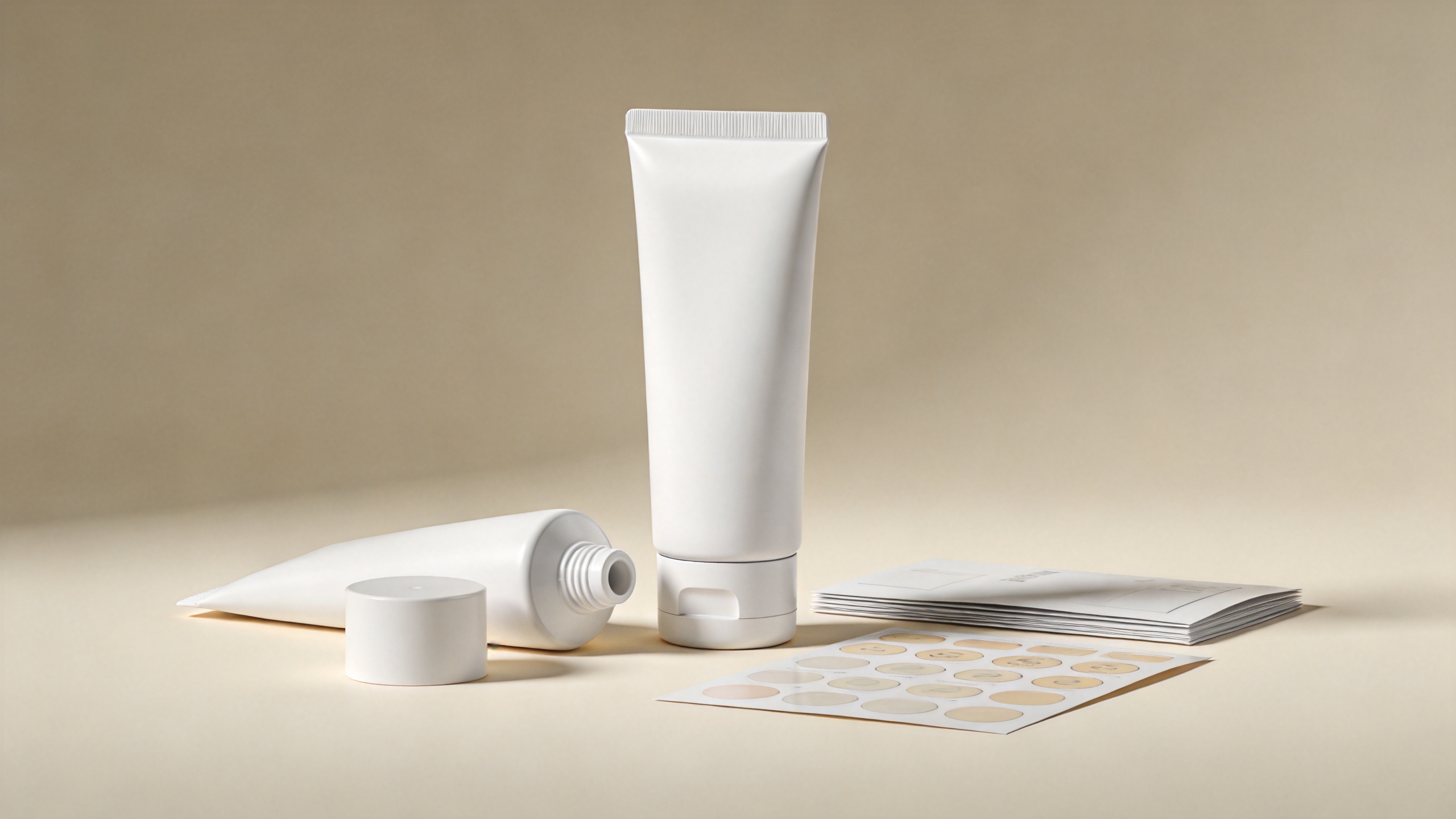
When you source custom packaging for beauty products, a printed sample is more informative than an isolated color chip. It lets the team inspect print readability, finish, seam placement, cap coordination, and the overall balance in the hand.
Plan filling and production validation early
Filling requirements should be shared before the package is finalized. Provide the filling method, estimated production volume, filling temperature if relevant, target fill quantity, and any operational limits known to the team. The earlier these requirements are discussed, the easier it is to avoid a tube or cap choice that looks suitable but creates unnecessary adjustments at filling.
ISO 22716 provides GMP guidelines covering the production, control, storage, and shipment of cosmetic products. It does not confirm that a specific package is right for a particular formula, but it is a useful reminder to document specifications, approvals, and handling expectations across the supply chain.
A practical validation sequence is: approve the specification, review pre-production samples, conduct the brand’s formula-package checks, confirm artwork, then define the bulk-production acceptance points. Keep notes from each stage. When questions arise later, a documented decision trail is more useful than relying on memory.
Use a supplier brief that supports fast, accurate comparison
A good inquiry is not just a request for price. It is a concise decision brief that makes comparison possible. For a custom tube project, include the product category, target capacity, preferred pack style, artwork requirements, intended markets, estimated order quantity, and timing. Also state which points still need supplier input.
Baolilai focuses on plastic tube packaging for cosmetics, skincare, personal care, and makeup applications, with custom printing and size discussions for overseas B2B buyers. If you need a concrete reference point for a tube-packaging discussion, review this custom printed cosmetic tube packaging option alongside your own formula, filling, and artwork requirements.
That last point matters: product imagery and a title can help begin a conversation, but the final selection should be verified against your project’s actual specification. For projects involving custom packaging for beauty products, the strongest outcome comes from aligning the formula, capacity, user action, visual identity, and production checks before bulk approval.
Custom packaging for beauty products: a specification review sheet
Use the following short review prompts during each cross-functional discussion. Each prompt keeps custom packaging for beauty products connected to a defined decision rather than an isolated visual preference.
- custom packaging for beauty products: confirm formula inputs.
- custom packaging for beauty products: confirm fill volume.
- custom packaging for beauty products: confirm tube diameter.
- custom packaging for beauty products: confirm tube length.
- custom packaging for beauty products: confirm dispensing needs.
- custom packaging for beauty products: confirm closure style.
- custom packaging for beauty products: confirm opening action.
- custom packaging for beauty products: confirm sample timing.
- custom packaging for beauty products: confirm compatibility checks.
- custom packaging for beauty products: confirm filling conditions.
- custom packaging for beauty products: confirm print coverage.
- custom packaging for beauty products: confirm artwork space.
- custom packaging for beauty products: confirm label information.
- custom packaging for beauty products: confirm target markets.
- custom packaging for beauty products: confirm storage assumptions.
- custom packaging for beauty products: confirm transport handling.
- custom packaging for beauty products: confirm acceptance criteria.
- custom packaging for beauty products: confirm color approval.
- custom packaging for beauty products: confirm finish approval.
- custom packaging for beauty products: confirm cap alignment.
- custom packaging for beauty products: confirm batch consistency.
- custom packaging for beauty products: confirm change control.
- custom packaging for beauty products: confirm supplier questions.
- custom packaging for beauty products: confirm production sign-off.
- custom packaging for beauty products: confirm documented records.
- custom packaging for beauty products: confirm final sample retention.
- custom packaging for beauty products: confirm a launch-ready brief.
- custom packaging for beauty products: confirm next-step ownership.
- custom packaging for beauty products: confirm review deadlines.
- custom packaging for beauty products: confirm final approval.
- custom packaging for beauty products: confirm post-launch feedback.
- custom packaging for beauty products: confirm future reorder specifications.
Final checklist before approving custom beauty packaging
- Have you documented the formula, target capacity, and intended use?
- Have you evaluated a relevant sample with the intended closure and decoration?
- Has the filling process been discussed with the package configuration?
- Is the artwork legible and does it reserve space for necessary product information?
- Have the brand’s own compatibility and approval checks been completed before bulk production?
Use this checklist to turn a broad packaging idea into a controlled sourcing decision. It keeps the conversation focused on the details that affect daily use and production readiness, while leaving room for the brand expression that makes a beauty product recognizable.