 EN

Stand-Up Toothpaste Tubes: Packaging Features to Consider for Brand Development
A colgate stand up tube is often used by buyers as a shorthand for a toothpaste pack that sits upright on its cap or base and looks organized on shelf. For a brand team, however, the useful question is not how closely a package resembles a retail reference. It is whether the tube geometry, material system, closure, decoration, and filling process work together for the intended formula and channel.
From a tube-specification communication perspective, an upright toothpaste tube should be reviewed as a system. A stable-looking sample can still need changes to its shoulder, cap fit, laminate structure, or seal parameters before it is ready for production. The following framework helps a brand turn a colgate stand up toothpaste reference into a clear supplier brief without making assumptions about a particular brand’s proprietary package.
Start with the Upright Format, Not the Visual Reference
The appeal of a stand-up tube is straightforward: the pack presents the cap end as its base, can keep the dispensing end accessible, and gives a toothpaste range a neat vertical footprint. But “stand-up” is a structural requirement, not only an appearance choice. The base area, cap profile, tube diameter, fill weight, and center of gravity all influence whether the pack remains stable after handling and during display.
When briefing a supplier, define the intended display position and the conditions around it. Will the product sit in a humid bathroom, a retail tray, or an e-commerce shipping carton? Is the cap expected to be the standing base, or does the tube use a formed base feature? These details affect cap selection and tube proportions. A common mistake is confirming only nominal volume without also reviewing the closure footprint and the filled pack’s tendency to lean or tip.
- Specify target fill volume and acceptable headspace.
- Confirm tube diameter, shoulder profile, overall height, and cap/base dimensions together.
- Ask for standing-position photos or physical samples with the intended closure fitted.
- Review how the pack behaves after repeated squeezing rather than judging only an empty tube.
Choose the Tube Material Around Formula Protection and Brand Goals
For brand teams comparing a colgate stand up tube concept, material selection starts with the product brief rather than a retailer image. The same colgate stand up toothpaste visual direction can be executed with different tube structures, so the supplier should explain what each construction means for barrier performance, printability, handling, and validation.
For toothpaste, the tube needs to manage a dense formula, repeated squeezing, and a closure that remains practical for daily use. Industry packaging guidance commonly describes laminated constructions with barrier layers such as aluminum or EVOH as options for reducing exposure to oxygen, moisture, and light. An ABL structure may be considered when barrier performance is a key discussion point, while plastic-oriented multilayer constructions can be evaluated where material direction, appearance, and recycling goals need to be weighed together.
Neither route should be treated as an automatic answer. If formula protection is the priority, first confirm the actual formula, required shelf-life protocol, and barrier target with the technical parties involved. If material simplification is the priority, the brand should clarify what performance trade-offs may need validation. In other words, a premium-looking colgate stand up tube does not automatically suit every formula or market channel.
| Decision area | Questions to align with the supplier | Why it matters |
|---|---|---|
| Tube construction | PE, laminate, or another agreed multilayer approach? | Sets the starting point for barrier, feel, print surface, and recycling discussion. |
| Barrier requirement | Which exposure risks must be controlled for the formula? | Helps avoid selecting a material only for appearance. |
| Compatibility | What sample, stability, and contact tests are required? | Packaging compatibility should be verified with the real formula and storage conditions. |
| End of life | Which market claims or recycling pathway are intended? | Keeps sustainability communication aligned with the actual material design. |
Match the Closure and Dispensing Experience to the Paste
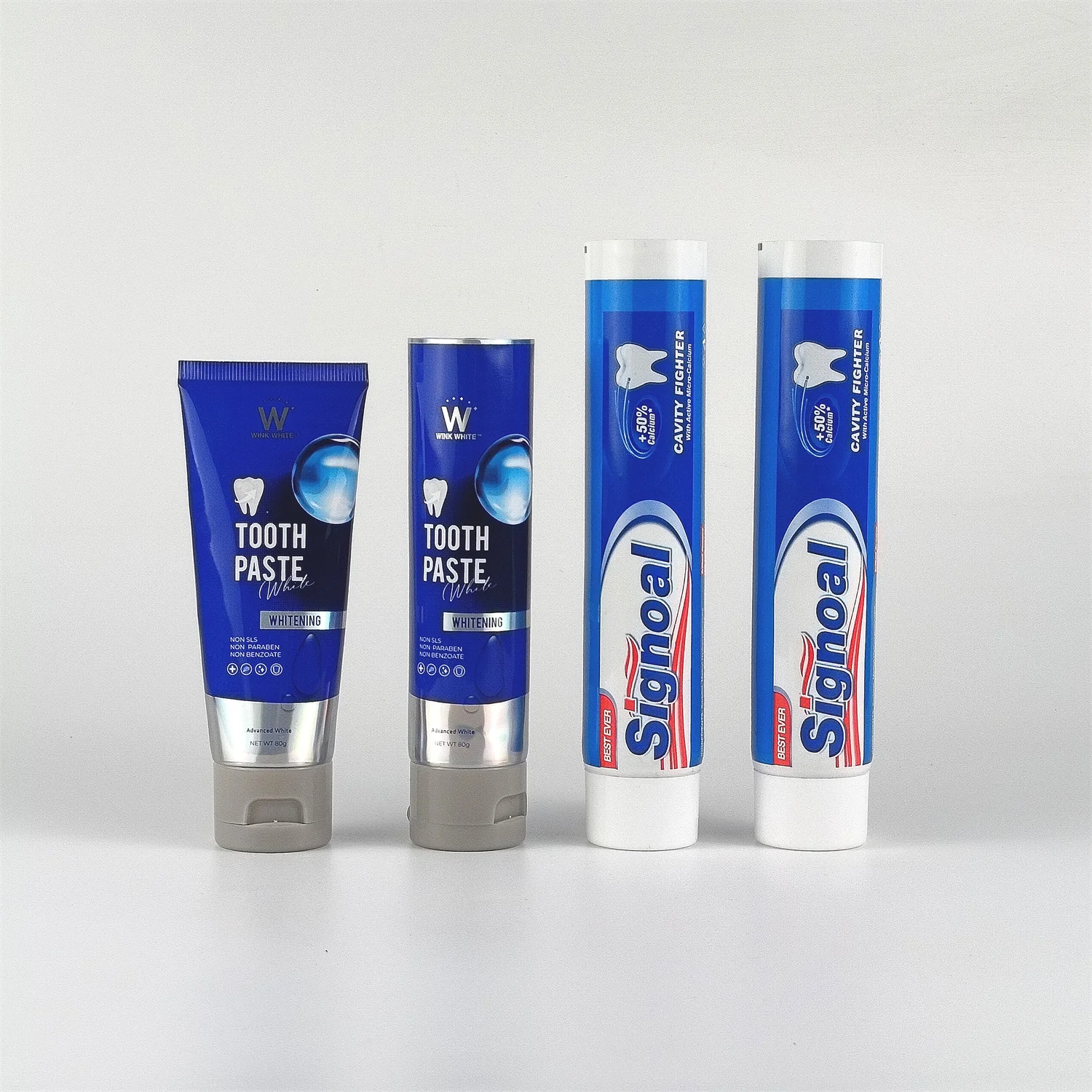
When evaluating a colgate stand up tube format, ask to see the selected cap on a filled sample. For a colgate stand up toothpaste positioning, the base footprint, opening action, and reclosure feel should be assessed together rather than treated as separate purchase decisions.
The closure is part of the stand-up structure and part of the user experience. A flip-top cap can make one-handed opening convenient; a screw cap may suit another positioning or production set-up. Whatever the choice, the opening size, thread engagement, cap hinge behavior, and sealing design should be reviewed against paste viscosity and the intended dispensing feel.
In sample reviews, it is useful to observe the surface finish and the complete user action: opening, squeezing, dispensing, reclosing, and returning the pack to an upright position. A cap that looks proportionate on an unfilled sample may feel different when the tube is filled, or it may not provide the shelf stance the brand expected. Treat this as a sample-validation question rather than a presumed performance claim.
Use Decoration to Support Recognition Without Over-Specifying Too Early
A colgate stand up tube reference can clarify the desired shelf posture, but it should not dictate untested artwork or surface choices. For a colgate stand up toothpaste product direction, make sure the selected design remains readable after the tube is formed, filled, squeezed, and displayed upright.
Stand-up presentation gives a toothpaste label a consistent front face, which can help color blocks, claims panels, and product variants read quickly. At the early development stage, identify what must remain consistent across the range: logo placement, key color areas, variant coding, tactile effect, and legal copy space. Then ask the supplier which print method, finish, and artwork tolerances suit the selected tube construction.
For example, matte or glossy effects, metallic accents, and multi-color graphics should be confirmed with physical or production-representative samples. Artwork that appears crisp in a digital proof can respond differently to a curved, squeezable surface. When visual impact and procurement budget cannot both be maximized, state the priority before finalizing the decoration stack.
Turn the Concept into a Supplier-Ready Specification Sheet
To convert a colgate stand up tube idea into an orderable package, put measurable requirements in writing. A supplier can respond more accurately when the brand describes intended use and approval criteria instead of relying only on a colgate stand up toothpaste search reference.
A strong sourcing brief separates what the brand wants from what still needs validation. For a colgate stand up toothpaste-style format, the following checklist keeps those conversations practical:
- Product information: formula category, target fill volume, market, and planned channel.
- Tube dimensions: diameter, body length, shoulder style, wall or laminate construction, and tolerance expectations.
- Upright configuration: cap/base concept, required standing behavior, and carton or tray conditions.
- Closure and dispensing: cap type, orifice concept, tamper-evidence needs, and user-experience expectations.
- Artwork and finish: print colors, varnish or surface effect, key registration areas, and proof approval process.
- Validation plan: formula compatibility, stability, leak/seal review, transit handling, and approval samples.
For brands exploring custom laminated options, Baolilai’s custom printed ABL laminated toothpaste tube range can provide a relevant starting point for a supplier conversation. The final material, dimensions, decoration, and performance requirements should still be confirmed against the actual project brief and sample results.
What to Validate Before Approving Production
The final review should test whether the colgate stand up tube concept works as an actual product pack. A colgate stand up toothpaste sample should be evaluated for upright stance, dispensing, closure fit, visual consistency, and compatibility under the brand’s own validation plan.
Before moving from a visual concept to a production order, use samples to check the decisions that cannot be proven by a drawing alone. Confirm that the filled pack stands as intended, that the cap feels secure and opens acceptably, that the print remains legible on the formed tube, and that the formula-contact evaluation follows the brand’s protocol. Also review batch consistency expectations: color, seam appearance, cap fit, and decoration alignment all matter to a pack designed to stand visibly on shelf.
The practical takeaway is simple. Use a colgate stand up tube as a reference for the consumer-facing format, not as a specification in itself. The development work is to translate that reference into measurable requirements, test them with the real formula, and document the decisions in a supplier-ready brief. That process gives the brand more control over appearance, use, and repeatable production.