 EN

What Is a Cleanser Tube and Why Do Personal Care Brands Use It
A cleanser tube is a squeezable package designed to hold and dispense facial cleansers, cleansing gels, creams, scrubs, and related personal-care formulas. In practical terms, a cleanser tube is the package format that turns a formulated product into a controlled, consumer-ready daily-use item. For a brand team, it is not just a container. It affects how much product a customer can dispense, how the product looks on shelf, how easily information fits on pack, and what needs to be checked before a production order is released.
From a cosmetic packaging buyer’s perspective, the useful question is not simply “Should we use a tube?” It is “Which cleanser tube format fits this formula, use occasion, brand position, and filling process?” A tube can be a practical match for a daily face wash, but the final material, shoulder, cap, diameter, decoration, and barrier needs should be evaluated together.
What makes a cleanser tube different from other packs?
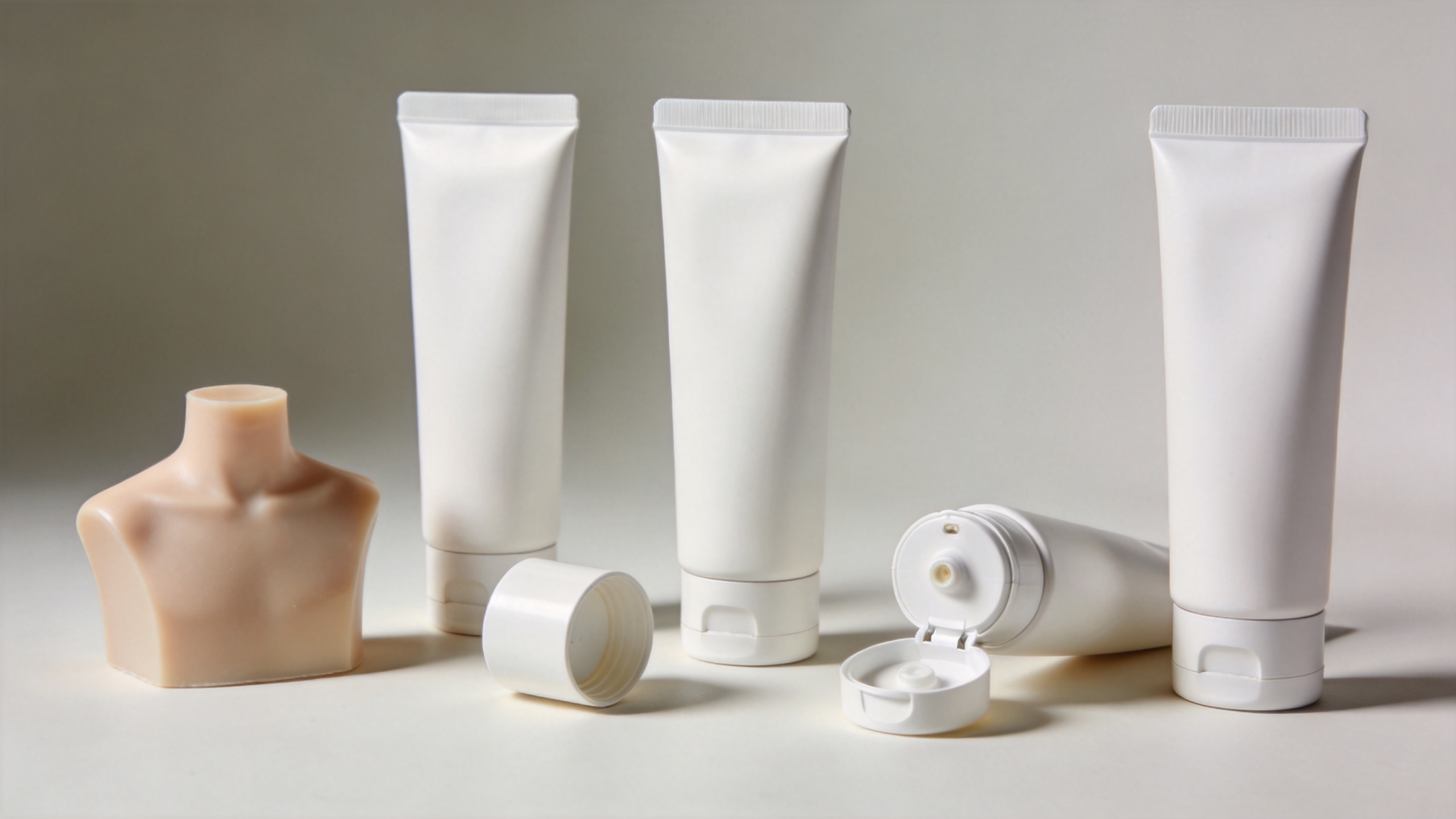
A cleanser tube typically has a flexible tube body, a shoulder and neck, a closure, and a sealed tail. Consumers squeeze the body to dispense product, then close the cap after use. That familiar action helps explain why tubes are common for rinse-off personal-care products: a user can control a small portion at a time without pouring from a bottle.
Compared with a jar, a cleanser tube can reduce how often fingers contact the remaining formula. Compared with a rigid bottle, it can be easier to use when the fill level is low. These are format-level advantages rather than guarantees; actual user experience still depends on formula viscosity, orifice size, cap design, and the tube’s recovery after squeezing.
Cleanser tubes are used for more than face wash. The same general format can be considered for exfoliating cleansers, body wash, shampoo, shower gel, hand cream, body cream, and some mask or treatment products. The application should guide the pack decision instead of the other way around.
Why personal-care brands choose cleanser tubes
For many teams, a cleanser tube offers a balanced starting point: it presents the product clearly, supports controlled dispensing, and can be adapted to a range of personal-care portfolios. The right cleanser tube is still a project-specific choice, but the format gives designers and buyers several variables to work with.
Controlled, familiar dispensing
A cleanser tube gives customers a familiar squeeze-and-dispense action. That can suit daily routines, particularly when a formula is a gel, cream, or lotion rather than a free-flowing liquid. Brands can work with their packaging supplier to align the opening and closure with the intended dose. A larger opening may suit a thicker scrub, while a smaller opening may help a lighter cleanser dispense in a more measured way.
Efficient use of shelf and label space
The front, back, and side areas of a tube can carry brand graphics, product positioning, directions, ingredient information, and market-required copy. For a personal-care launch, this is valuable because the pack must work as both a functional dispenser and a communication surface. Decoration choices should be reviewed alongside artwork legibility, print registration, and the space required for variable codes or compliance information.
Flexible format choices for brand positioning
Tube packaging allows a brand to consider different looks without changing to an entirely different product format. Diameter, length, cap style, finish, color, and printing approach can all change the on-shelf impression. A minimal daily cleanser may call for a clean, straightforward presentation, while a premium skincare line may prioritize tactile or decorative effects. The practical boundary is important: the selected finish still needs to be assessed against the formula, filling conditions, handling, and sample results.
Options for material and barrier planning
Personal-care tubes may be made with plastic structures such as PE or PP, or with laminate constructions that combine layers for specific packaging needs. There is no universal material choice for every project. A brand should begin with the formula and the commercial brief: viscosity, ingredient sensitivity, fragrance, target fill volume, transport conditions, target markets, and desired end-of-life direction all influence the conversation.
For example, a sustainability objective may lead a team to ask about tube designs that better align with a particular recycling stream. That is an engineering and market-specific question, not a claim that every plastic tube is recyclable everywhere. It should be confirmed with the supplier, the relevant collection system, and the intended market.
How to select the right cleanser tube for a formula
Selecting a cleanser tube starts with the product rather than a catalog image. The formula, filling line, target user, and commercial brief should shape the tube specification as one connected decision.
At an early packaging stage, it is useful to move from the use scenario to the requirements and then to a format match. Before comparing decoration details, gather the basics below.
- Formula behavior: Is the cleanser a thin gel, a dense cream, a scrub with particles, or an oil-based product? Viscosity and particle size can affect dispensing and opening selection.
- Fill size and handling: What net content is planned, and will the product be used at home, while traveling, or in a professional setting?
- Closure and user routine: A flip-top cap, screw cap, or other closure may change one-hand use, leak resistance, and shelf presentation.
- Material and compatibility: Ask for a packaging compatibility review and samples. It is easy to focus first on the appearance; later, teams often find that formula compatibility and filling conditions deserve earlier attention.
- Artwork and market information: Confirm the layout for branding, directions, ingredients, claims, barcode placement, and any destination-market requirements.
- Production validation: Confirm samples, decoration, cap fit, filling performance, and transport expectations before scaling to a bulk order.
One common oversight is confirming capacity without confirming the full dispensing system. The tube body, orifice, shoulder, cap, and formula need to work as a set. Use sample evaluation to test the whole set; a tube that looks similar may not behave the same way in filling or use.
Packaging details worth confirming before bulk production
Before a cleanser tube moves from concept to production, bring the packaging supplier, formula team, and artwork owner into the same review. This reduces the chance that an attractive cleanser tube sample is approved before the technical details have been checked.
| Decision area | Questions to ask | Why it matters |
|---|---|---|
| Tube structure | Which material structure suits the formula and desired barrier level? | Supports informed compatibility and product-protection discussions. |
| Dimensions | What capacity, diameter, and length fit the intended use and shelf plan? | Influences proportion, labeling room, and how the package feels in hand. |
| Closure | What cap type, opening, and sealing approach fit the formula? | Affects dispensing, convenience, and leakage evaluation. |
| Decoration | Which colors, finish, and printing method support the brand while keeping copy legible? | Connects visual identity with production feasibility. |
| Validation | Which samples and tests are needed before approval? | Helps teams verify fit rather than relying on a rendering or specification alone. |
A practical starting point for custom cleanser tube projects
A custom cleanser tube project is easier to scope when the brief names the formula, target volume, closure preference, visual direction, and required market information. Those inputs help a packaging supplier prepare relevant samples rather than offering a generic format.
Brands that need a starting reference can review this custom printing face wash tube packaging option. The product page provides a relevant starting category for cleanser, body cream, hand cream, shampoo, and shower-gel packaging discussions. It should not replace a project-specific confirmation of formula compatibility, dimensions, artwork, or final specifications.
Baolilai works with cosmetic, skincare, personal-care, and color-cosmetic packaging discussions, including custom tube packaging, printing, and size-related requirements. Brands can also visit the Baolilai packaging website to understand the supplier’s broader packaging focus. For a brand or contract manufacturer, a productive request for quotation begins with the formula type, target capacity, preferred pack look, intended markets, and any sample or filling constraints.
Key takeaways
A cleanser tube is a flexible dispensing format for face wash and other personal-care formulas. A well-specified cleanser tube can support both the daily-use routine and the operational needs of a packaging launch. Brands use it because it can combine controlled dispensing, practical everyday handling, brandable surface area, and broad customization possibilities. A sound pack choice connects the use scenario with the formula, closure, material structure, graphics, and validation plan.
If packaging appearance is a priority, start with the visual direction—but do not stop there. Confirm compatibility, filling conditions, and sample performance early. That approach gives the brand a clearer path from a cleanser-tube concept to a package that is ready for production.