
 EN

50ml vs 120ml Toothpaste Packaging Tubes
For an oral-care brand, choosing a toothpaste packaging tube is not simply a question of how much formula fits inside. A 50ml tube and a 120ml tube can signal two very different offers: one may support trial, travel, or a premium focused routine, while the other may serve family use, value perception, and longer shelf life at home. The most reliable choice starts with the product line, channel, and pack specification—not a volume number in isolation.
This comparison is written for brand teams, OEM/ODM buyers, and packaging distributors reviewing flexible tube options. It focuses on application positioning, shelf presentation, and the practical specification discussions that should happen before artwork and tooling are finalized.
Start with the role each toothpaste packaging tube plays in the range
A 50ml toothpaste packaging tube is often easier to position as a compact format. It can make sense for travel-oriented collections, sampling programs, hotel amenities, gift sets, children’s lines, or premium formulas where a smaller entry price and controlled trial are useful. Its visual message is concise: portability, discovery, or a targeted routine.
A 120ml toothpaste packaging tube, by contrast, is commonly better aligned with regular home use. It gives the front panel more room to communicate variant names, flavor, benefit hierarchy, directions, and required copy. For brands selling through supermarkets, pharmacies, marketplaces, or distributor networks, the larger format can also make a range feel more substantial on shelf.
Neither capacity is automatically “better.” The commercial question is whether the tube reinforces the consumer’s expected usage occasion. If a 50ml pack is treated as a family staple, it may need frequent replacement. If a 120ml pack is presented as a travel solution, the physical container capacity may conflict with carry-on expectations in some markets. For example, the U.S. TSA states that carry-on liquids, gels, and aerosols must be in containers of 3.4 oz / 100ml or less; toothpaste is generally handled as a gel. Brands should still verify the destination-specific rule before making a travel claim.
50ml vs 120ml: compare the packaging decision beyond fill volume
| Decision area | 50ml tube | 120ml tube |
|---|---|---|
| Typical positioning | Travel, trial, premium mini, children’s, gift, or amenity formats | Daily-use, family, value, and mainstream retail formats |
| Panel space | More limited; hierarchy and legibility need early attention | More room for claims, directions, variant cues, and multilingual copy |
| Carton and display | Compact cartons and multi-pack options may be easier to explore | Greater shelf presence; display dimensions and case packing deserve review |
| Consumer replacement cycle | Usually shorter, depending on formula and use pattern | Usually longer, depending on household size and use pattern |
| Travel relevance | Comfortably below the 100ml container threshold used in many carry-on rules | Not suitable for a 100ml-or-less carry-on positioning without checking local rules |
The table is a planning tool, not a prescription. Actual tube diameter, shoulder design, cap, paste density, headspace, and local labeling obligations can all change the final specification. A capable toothpaste packaging tube brief should therefore state the intended fill weight, formula behavior, target market, and distribution channel before a supplier proposes a finished construction.
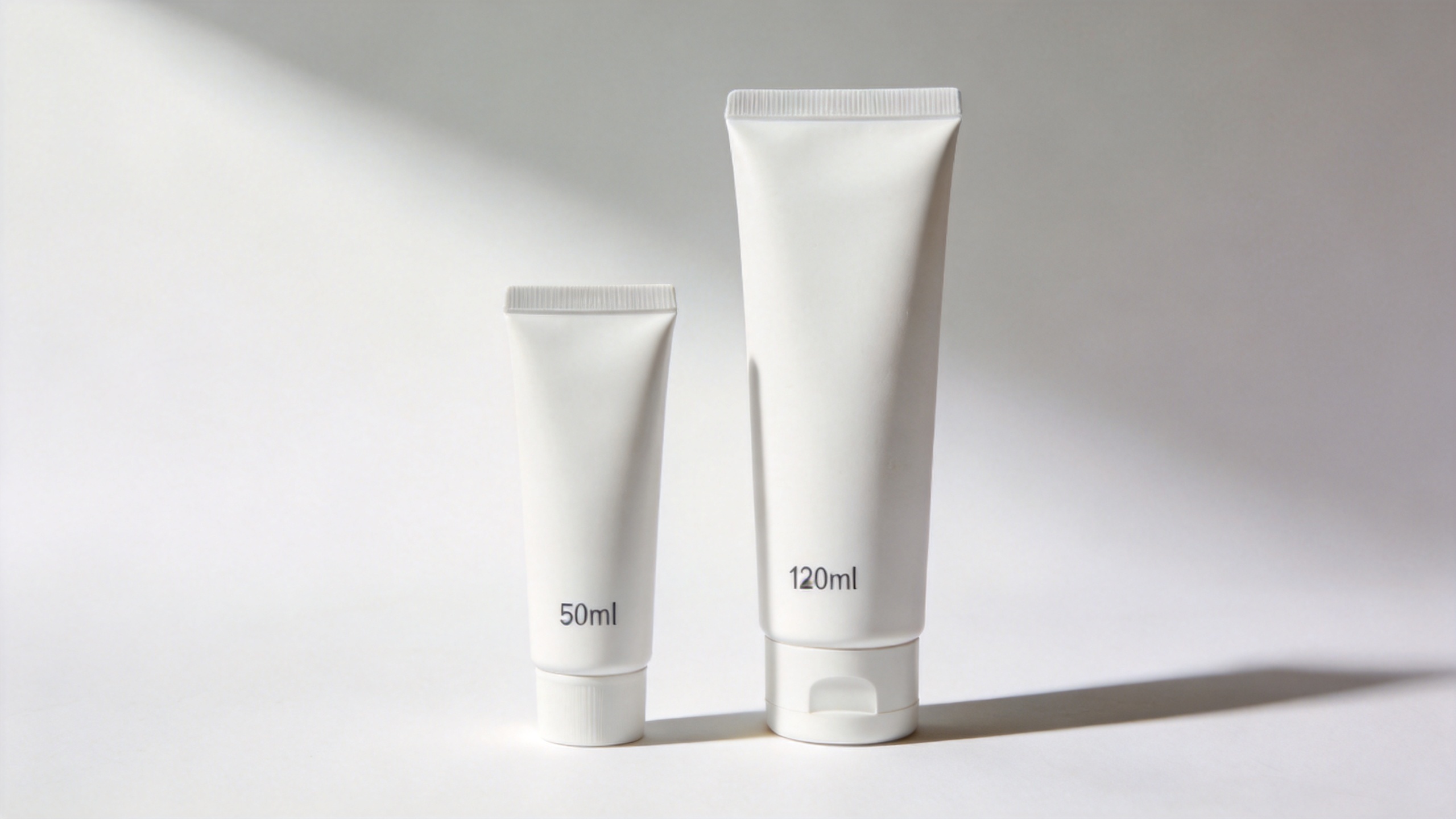
How capacity changes shelf presentation and artwork planning
On a 50ml toothpaste packaging tube, every visual element competes for a small printable area. Brand managers should decide what the consumer needs to recognize at a glance: brand, flavor or benefit, format, and any mandatory information. Dense artwork can reduce legibility, especially when the tube is viewed quickly in a small retail display or a travel set.
A 120ml tube normally provides more graphic territory, but that does not mean it should be filled with text. A larger package benefits from a clear front-of-pack hierarchy and enough contrast for the product name to remain readable at shelf distance. If a range is sold across Southeast Asian markets, leave room early in the artwork process for the languages, regulatory copy, and distributor labels that may be required for the final route to market.
Both formats benefit from an artwork review that includes the tube body, shoulder, cap color, carton, and case-facing orientation. The most attractive layout on a flat proof may not be the clearest layout once the tube is rounded, capped, and placed beside competing packs.
Material and closure choices are separate from the 50ml-or-120ml decision
Capacity does not by itself determine the right laminate or closure. Search results for toothpaste packaging tube materials frequently discuss PBL and ABL constructions, but the appropriate choice depends on the formula, required barrier properties, decorating method, intended shelf conditions, and validation results. Treat the material selection as its own workstream rather than assuming that a small tube needs one construction and a larger tube needs another.
The same applies to caps. A flip-top cap may support convenient home use, while a screw cap or a different dispensing configuration may fit another range concept. Ask for samples that let the team evaluate opening feel, dispensing control, standing stability, and compatibility with the actual formula. Those checks are more useful than selecting a cap solely because it is common for a given volume.
A practical specification checklist for brand buyers
- Define the occasion. Is the pack for everyday home use, a travel routine, sampling, a promotional kit, or a specific age group?
- Confirm the fill requirement. Specify the intended net content and formula density rather than selecting a tube only by a nominal milliliter figure.
- Map the channel. Review carton, display, e-commerce photography, case pack, and shipping requirements for the markets you plan to serve.
- Prioritize copy. List the front-panel elements, mandatory information, languages, and variable data before finalizing tube dimensions.
- Validate construction. Review formula compatibility, barrier needs, cap function, print durability, and shelf-life requirements with the appropriate tests.
- Approve physical samples. Check a filled or representative sample under real handling conditions before committing to bulk production.
Using one supplier discussion to compare both formats
When a brand is building a portfolio, it is often more efficient to review 50ml and 120ml options together. Shared colors, a consistent brand system, and coordinated cap choices can make a smaller travel or trial pack feel connected to a larger daily-use pack. At the same time, the formats should not be forced to look identical if their selling occasions are different.
For a starting point in a custom oral-care packaging conversation, review the available details for custom printed ABL laminated toothpaste tubes in 50ml and 120ml options. Use the product page as a discussion reference, then confirm the final size, print requirements, and material suitability against your own formula and market plan.
Conclusion: choose the toothpaste packaging tube that fits the product story
A 50ml toothpaste packaging tube can support compact, trial-led, and travel-conscious product stories. A 120ml toothpaste packaging tube is often better suited to regular household use, broader on-pack communication, and a stronger everyday retail presence. The better decision comes from matching capacity to usage occasion, retail channel, artwork needs, and technical validation—not from treating one size as a universal default.
Before requesting quotations, prepare a short brief covering formula, net content, target countries, artwork needs, closure preference, and planned sales channel. That preparation will help suppliers give more useful options and help your brand compare tube formats on the factors that actually influence the launch.