
 EN

ABL Tube vs PBL Tube: Key Differences for Toothpaste Packaging
For toothpaste brands, choosing an ABL tube or a PBL tube is not simply a visual decision. The laminate affects how a formula is protected, how the pack feels in the hand, how artwork appears, and what a supplier needs to verify before volume production. A practical comparison starts with the product itself: its sensitivity to oxygen, moisture, light, fragrance loss, and the pressures created by filling, sealing, shipping, and everyday squeezing.
Both formats belong to laminated tube packaging, and both are widely used for toothpaste and personal-care products. The right choice is therefore project-specific. This guide gives brand owners and purchasing teams a structured way to compare ABL and PBL before requesting samples or quotations.
What is an ABL tube?
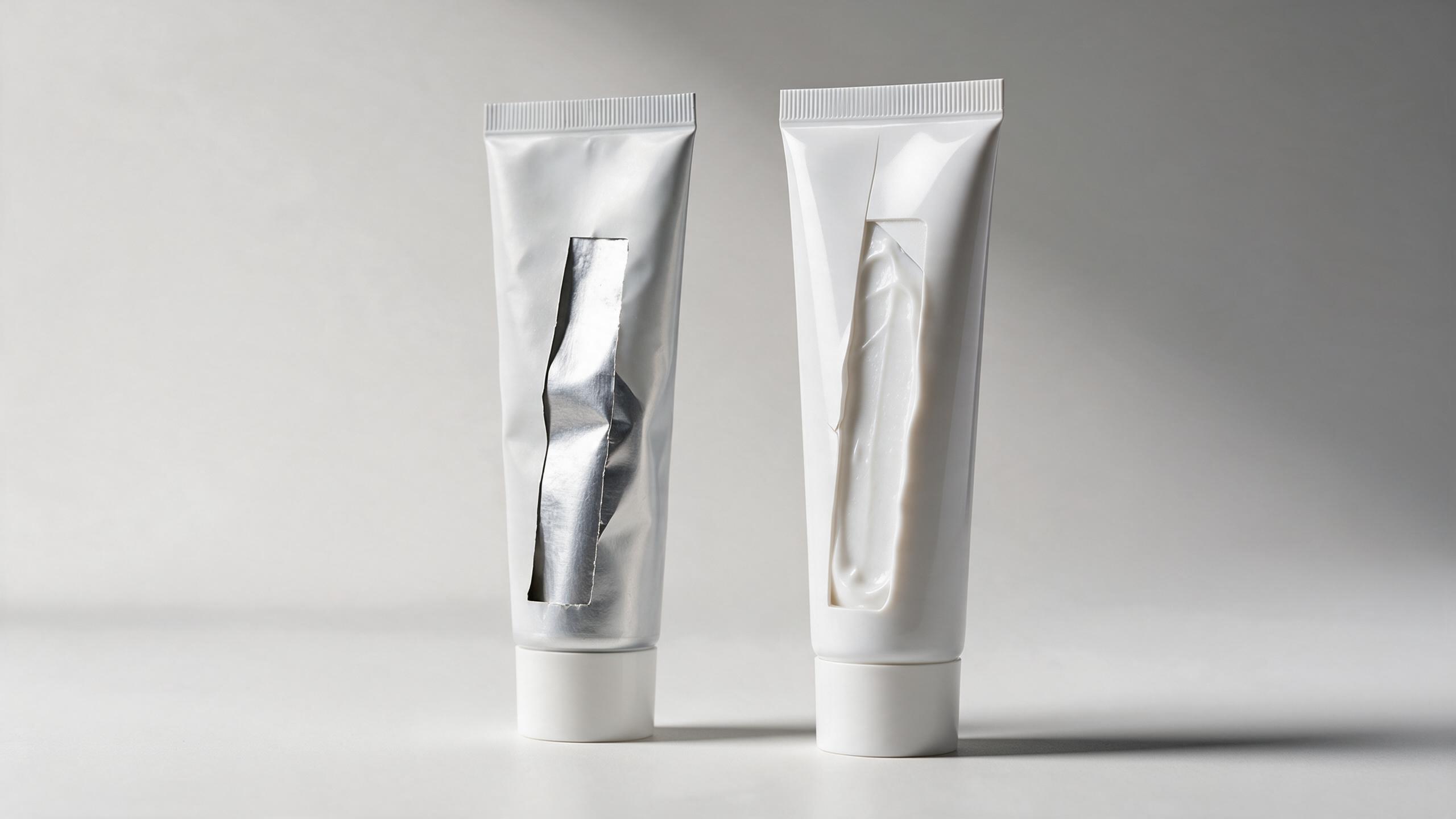
An ABL tube is an aluminum barrier laminate tube. Its multilayer wall includes a thin aluminum layer between polymer layers. That construction is commonly selected when a formula needs a stronger barrier against light, oxygen, or moisture. For a toothpaste project, an ABL tube can be worth considering when formula stability, aroma retention, or a more opaque pack appearance is a central requirement.
The aluminum layer does not, by itself, guarantee a specific shelf life. Final performance still depends on the laminate design, tube diameter, shoulder, cap, seal, filling conditions, formula compatibility, and the validation method used for the project. It is better to treat an ABL tube as a packaging direction to test, rather than as a universal answer for every toothpaste formula.
What is a PBL tube?
PBL means plastic barrier laminate. A PBL tube uses a multilayer plastic construction, often with a plastic barrier material selected for the product’s needs. It is commonly used across toothpaste, cosmetics, and personal-care packaging. Compared with an ABL tube, a PBL format is often evaluated for its softer plastic feel, flexibility, and the look a brand wants on shelf.
PBL is not one fixed material recipe. Different suppliers may use different layer arrangements and resins, so teams should avoid comparing only the label “PBL.” Ask what barrier approach is proposed, which formula conditions it is intended to support, and which tests can be performed on the finished pack.
ABL tube vs PBL tube: the decision points that matter
| Selection area | ABL tube | PBL tube | What to confirm |
|---|---|---|---|
| Barrier direction | Uses an aluminum barrier layer and is commonly chosen where light, oxygen, and moisture protection are priorities. | Uses a plastic barrier construction; suitability depends on the selected laminate structure. | Formula sensitivity, target shelf life, and validation plan. |
| Appearance | Can support opaque, metallic, or high-coverage visual effects depending on the laminate and decoration. | Often supports a plastic-forward appearance and flexible design choices. | Artwork coverage, finish, color reference, and print proof process. |
| Hand feel and recovery | May feel more structured because of its laminate composition. | Often considered when a softer, more plastic-like squeeze feel is desired. | Squeeze test, panel appearance after use, and consumer handling expectations. |
| Procurement review | Requires confirmation of barrier need and compatible sealing/filling conditions. | Requires confirmation of the specific barrier layer and formula compatibility. | Samples, filling trial, leakage check, and final specification approval. |
This comparison is deliberately conditional. ABL is not automatically “better,” and PBL is not automatically the lower-risk option. The better laminate is the one that supports the confirmed toothpaste formula, desired presentation, and production process with evidence from samples and tests.
How toothpaste formulas influence laminate selection
Start the conversation with the product team rather than with a preferred tube name. Share the toothpaste type, key ingredient categories, fragrance or flavor requirements, expected storage conditions, fill temperature, and desired shelf-life objective. Then ask the packaging supplier which ABL tube or PBL structure is proposed and why.
For formulas that need greater protection from environmental exposure, an ABL tube may be included in the evaluation because of its aluminum barrier layer. For projects where a plastic-oriented feel or a specific appearance is more important, a PBL option may be appropriate. In either case, compatibility testing is the decision gate. A visually attractive tube that has not been checked with the actual formula creates avoidable risk later in the launch schedule.
Specifications to align before requesting a quotation
Good sourcing conversations convert broad preferences into a usable specification. When comparing laminated tube packaging, prepare a brief that covers:
- Capacity and dimensions: target fill volume, tube diameter, length, and allowable tolerance.
- Laminate direction: ABL tube or PBL tube under evaluation, plus the product-protection concern behind the choice.
- Shoulder and closure: shoulder style, cap type, tamper-evident expectations, and dispensing experience.
- Decoration: print colors, finish, coverage, artwork file requirements, and color-approval process.
- Manufacturing validation: sample quantity, filling trial, seal integrity review, transport considerations, and approval milestones.
- Commercial requirements: expected order volume, market destination, lead-time target, and packaging for export shipment.
For reference, Baolilai offers a custom printed ABL laminated toothpaste tube in 50 ml, 60 ml, 120 ml, and 150 ml options. Use a confirmed product page like this as a starting point for specification discussion; confirm the final material structure, decoration, closure, and suitability for your formula directly for the project.
A sample-and-test workflow for B2B buyers
For overseas brands, importers, and contract manufacturers, the fastest way to reduce uncertainty is to agree on a staged review. First, compare ABL tube and PBL samples for appearance, squeeze behavior, and format. Next, run a filling or compatibility trial using the intended toothpaste formula. Finally, approve artwork, sealing details, and shipment packaging before moving to volume production.
Keep the approval record specific. Note the laminate type, dimensions, cap, artwork version, color reference, sample date, and test observations. This makes later supplier communication clearer, especially when several teams are involved in product development, purchasing, and quality control.
Which tube should you choose?
Choose an ABL tube for evaluation when your toothpaste project places strong emphasis on barrier protection and an opaque or high-coverage package presentation. Consider PBL when the desired plastic-oriented feel and the selected plastic barrier structure align with the formula and brand direction. In both cases, the decision should be verified with the finished formula and agreed performance checks.
The most useful next step is not to ask whether ABL or PBL is universally superior. Send a concise packaging brief, request comparable samples, and define the tests that will decide the project. That process gives your team a clearer basis for selecting laminated tube packaging that supports both the product and the buying plan.