
 EN

Cosmetic Tube Supplier Checklist for New Beauty Brands
For a new beauty brand, choosing a cosmetic tube supplier is not simply a matter of selecting a color and requesting a price. The tube must suit the formula, express the intended brand position, and remain workable when the project moves from samples to repeat orders. A well-run supplier review turns those requirements into questions that can be answered with specifications, samples, and documented approvals.
This checklist is designed for brand founders, procurement teams, and OEM/ODM partners planning tube packaging for cosmetics. It focuses on the decisions that deserve confirmation before an order is released, especially when appearance, decoration, and batch communication matter.
1. Start with the formula and filling process
Begin the conversation with the product, not the tube finish. A cosmetic tube supplier should understand the formula type, viscosity, fill volume, intended application, storage conditions, and expected distribution environment. No single packaging material is suitable for every cosmetic formula: materials can differ in flexibility, rigidity, chemical resistance, and permeability. That is why compatibility should be treated as a validation task rather than an assumption.
Ask what the supplier needs to assess the proposed pack, and agree on the sample review method. During a compatibility review, buyers may need to watch for changes such as swelling, softening, cracking, leakage, odor change, discoloration, residue, or reduced closure integrity. These are checkpoints to agree and record; they are not results that should be presumed before testing.
- Share the formula category and any ingredients that may affect packaging compatibility.
- Confirm the nominal fill volume, filling temperature, dispensing style, and target shelf-life conditions.
- Define who approves the tube, cap, seal, and finished filled sample.
- Request that changes to material grade, color, decoration, or closure are communicated before production.
2. Compare tube materials by the decision you need to make
A capable cosmetic tube supplier can discuss available tube constructions without forcing a generic answer. New brands commonly compare plastic and laminate options according to the formula, desired feel, decoration concept, and purchasing plan. The useful question is not “Which material is universally suitable?” but “Which construction gives our formula and brand brief an appropriate balance of protection, squeezability, visual effect, and repeatability?”
For example, an aluminum-plastic tube may be considered when a project calls for a distinct visual direction and a squeezable package format. The final choice should still be supported by a sample and the agreed formula-pack evaluation. If a premium-looking surface is the priority, confirm that it is appropriate for the intended retail, transport, and use conditions rather than relying on appearance alone.
3. Turn the visual brief into a written specification
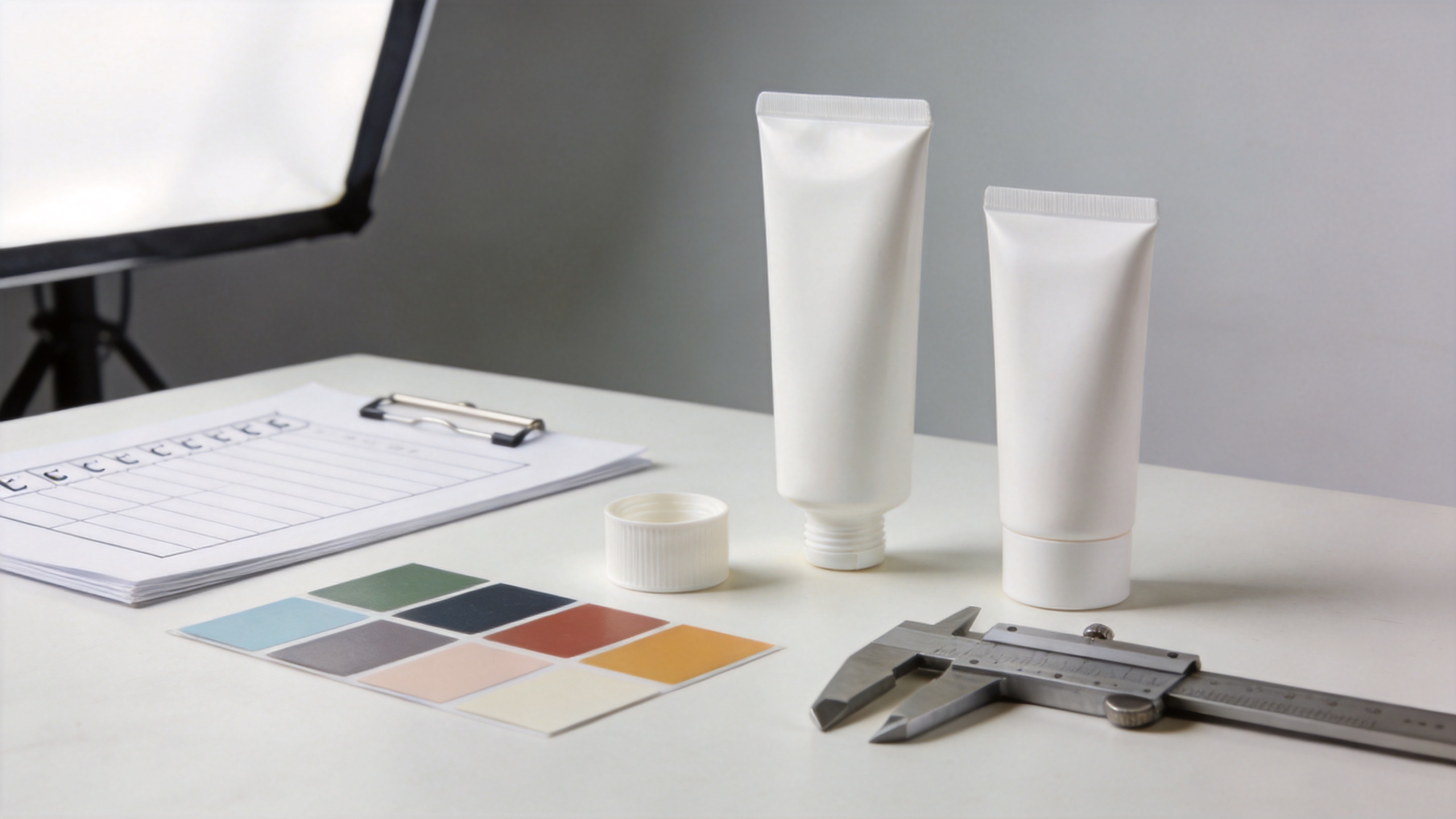
For new brands, packaging often becomes the first physical signal of product positioning. This makes artwork and finishing communication a supplier-selection issue, not just a design task. Ask the cosmetic tube supplier to convert the visual brief into reviewable details: tube shape, diameter, length, shoulder and cap style, base color, print areas, finish, and any plating or decorative treatment.
It is easy to focus on a striking finish first. In practice, the stronger approach is to confirm the specification and approval points alongside the appearance. A common procurement mistake is approving capacity or artwork without confirming how the closure, decoration, and intended filling process work together. A written approval record reduces the risk of each party interpreting the brief differently.
| Specification area | What to confirm with the supplier | Why it matters |
|---|---|---|
| Tube format | Shape, dimensions, capacity range, and squeeze feel | Supports filling, use experience, and shelf presentation |
| Decoration | Print files, colors, placement, finish, and approval sample | Turns brand intent into a repeatable production reference |
| Closure | Cap style, opening action, fit, and leak-check method | Helps prevent usability and integrity surprises |
| Change control | How material, artwork, or process changes are reported | Protects consistency across later orders |
4. Ask for evidence of communication and quality controls
A cosmetic tube supplier does not need to make broad promises to be a good fit. What matters is whether the supplier can explain its process, provide the documents that are relevant to the project, and respond clearly to verification questions. For cosmetics supply chains, buyers may ask what quality controls, batch identification, inspection records, and traceability practices can be shared. ISO 22716 is a cosmetics good-manufacturing-practice standard, but a buyer should not assume any supplier holds a certification without reviewing current, project-relevant evidence.
Use the same practical standard for samples. Ask which sample represents the proposed construction, which items are still provisional, and what approval is required before bulk production. This approach gives a new brand a more useful comparison than a price sheet alone.
5. Review customization and supplier responsiveness together
Customization has two parts: what can be shown on the tube and how reliably the supplier translates a brief into a production-ready specification. A decision-stage review should cover minimum order expectations, sample timing, artwork handoff, proof approval, packaging requirements, and the communication channel for changes. If your brand plans multiple SKUs, also ask how color references and approved components will be managed from one order to the next.
For a format reference, you can review this aluminum-plastic packaging squeeze tube with plating screw cover. Treat it as a starting point for an application and appearance discussion; verify the exact dimensions, construction, decoration, closure, and suitability for your own formula before confirming a specification.
6. Use a pre-order checklist before approving bulk production
- Formula brief: Have you supplied the relevant formula, fill, use, and storage information?
- Tube construction: Is the material and format tied to a sample review rather than a general description?
- Appearance: Are color, artwork, finish, and placement approved against a clear reference?
- Closure and integrity: Have opening, fit, and leakage checkpoints been defined for the proposed package?
- Quality communication: Do you know which inspection, identification, or traceability information can be provided?
- Commercial handoff: Are quantities, lead time, approval milestones, and change-notification expectations documented?
Choose the supplier that makes verification easier
The right cosmetic tube supplier for a new beauty brand is the one that helps the team make informed choices before volume is committed. Start with formula and filling requirements, translate the visual idea into an exact specification, review representative samples, and document what happens if a component or artwork changes. That process gives tube packaging for cosmetics a clearer route from concept to a repeatable purchase decision.
When preparing an inquiry, include your product category, estimated capacity, preferred appearance, artwork status, markets, and sample requirements. Clear inputs give suppliers a better basis for responding—and give your brand a stronger basis for comparison.