
 EN

How to Choose the Right Toothpaste Packaging Tube Size
Choosing a tube format is a packaging decision rather than a simple capacity choice. The right tube format connects the formula, declared fill, consumer use occasion, artwork, closure, and filling process. For B2B buyers, a clear brief and sample validation are more dependable than choosing a size from a generic catalogue.
A tube format for a trial pack, a family format, or a premium oral-care product will not have the same priorities. Start by defining the target market, fill weight, use frequency, and shelf position. Then compare dimensions, materials, and closures as one system.
Start With Fill Weight and Product Positioning
The first question for a tube format is how much product it must hold. Travel, sampling, and children’s formats often favor compact packs. Daily-use formats need a practical balance of capacity and handling. Family formats commonly start around 100 g, 120 g, or 150 g in industry packaging guidance, although these figures should be treated as project starting points rather than universal specifications.
A tube format should be specified in relation to actual formula density, not only a nominal volume. Confirm whether the claim is expressed in grams or milliliters, how much headspace the filler needs, and whether the product viscosity changes at expected storage temperatures. These points affect usable internal volume.
- Toothpaste packaging tube for travel: prioritize portability, compact dimensions, and clear on-pack information.
- Toothpaste packaging tube for daily use: balance repeat-use comfort, display presence, and label space.
- Toothpaste packaging tube for families: review higher fill weight, grip, carton size, and shelf stability.
- Toothpaste packaging tube for premium care: assess whether a refined smaller format better supports brand positioning.
Pair Diameter With Length and Shoulder Geometry
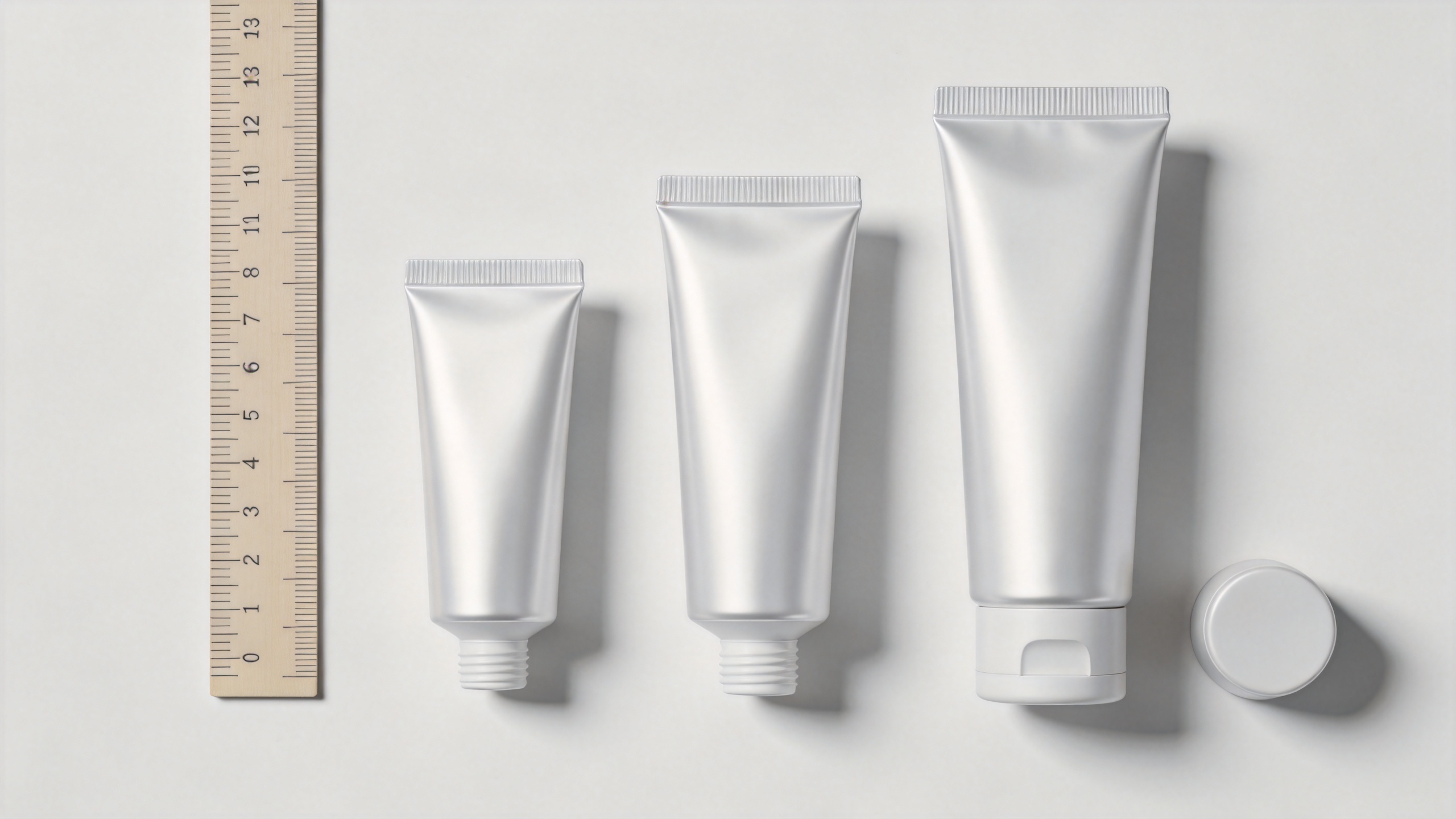
A tube format should not be selected by diameter alone. Diameter, body length, shoulder shape, and cap proportion determine visual balance, grip, dispensing control, and the usable area for artwork. A larger diameter can create a wider front panel; a slimmer body can produce a different shelf silhouette. Neither option is inherently better.
Supplier-published references show how broad the available choices can be. One guide lists diameters from 11 mm to 40 mm and capacities from 10 ml to 200 ml, with 30–35 mm cited as a possible range for a 100 ml aluminum tube depending on length and shelf appearance. Use such information only as an illustrative starting range. The final toothpaste packaging tube must be validated with a physical sample.
| Toothpaste packaging tube decision | Why it matters | What to check |
|---|---|---|
| Toothpaste packaging tube diameter | Affects grip, stiffness, cap proportion, and front-panel width. | Hand feel, artwork width, and carton fit. |
| Toothpaste packaging tube length | Changes shelf appearance and available print area. | Information hierarchy and transport dimensions. |
| Toothpaste packaging tube shoulder | Influences product flow and closure compatibility. | Orifice size, cap engagement, and residual product. |
| Toothpaste packaging tube body structure | Contributes to barrier needs and squeeze response. | Formula compatibility and sealing trials. |
Choose Material and Barrier Structure for the Formula
Material selection is central to every toothpaste packaging tube project. Search results frequently mention PBL and ABL constructions, reflecting the importance of barrier performance for oral-care packaging. Still, no tube structure should be approved solely because it is common. Flavor retention, moisture protection, abrasion, viscosity, storage conditions, and filling conditions must be reviewed against the actual formulation.
The better sequence is to validate the formula and filling process first, then finalize the visual finish. This approach prevents a toothpaste packaging tube from looking right in a rendering but creating issues during sealing, storage, or dispensing. Bring the packaging supplier and filling team into the discussion early, especially where a custom nozzle, cap, or tamper-evident feature is planned.
Specify the Closure Around the Dispensing Experience
The closure is part of the toothpaste packaging tube, not a separate decoration choice. A flip-top cap may suit frequent household use, while another closure may better fit a specialty, travel, or child-oriented format. Consider the nozzle opening, cap torque, standing stability, one-handed use, and how cleanly the product dispenses.
For a higher-viscosity formula, an opening that is too narrow may feel inconvenient. For a lower-viscosity formula, an opening that is too large may reduce control. A complete toothpaste packaging tube sample should therefore include the intended body, shoulder, closure, and product wherever possible.
Validate Filling and Sealing Before Mass Production
Capacity, diameter, length, formula viscosity, cap size, and filling requirements need to be assessed together. That is particularly important when a toothpaste packaging tube is being developed for an existing line. A suitable-looking tube may still need changes if it does not fit line holders, orientation equipment, sealing conditions, coding space, or quality-control requirements.
- Toothpaste packaging tube brief: define formula, target fill, market, and pack positioning.
- Toothpaste packaging tube shortlist: compare capacity, diameter, length, structure, and closure combinations.
- Toothpaste packaging tube artwork review: reserve space for claims, languages, and batch coding.
- Toothpaste packaging tube sample review: check fill weight, tail seal, cap fit, and dispensing feel.
- Toothpaste packaging tube line trial: validate filling, sealing, transport, and shelf display before release.
Prepare a Supplier-Ready Specification Brief
A complete toothpaste packaging tube brief helps suppliers provide comparable options and reduces revision cycles. Baolilai focuses on custom plastic tube packaging and can support conversations about tube size and printing requirements. Its custom ABL laminated toothpaste tube options list 50 ml, 60 ml, 120 ml, and 150 ml formats. Each option should still be checked against the actual formula, closure, and filling setup.
Include target fill and tolerance, preferred dimensions, tube construction, shoulder and nozzle style, cap type, decoration, finish, markets, testing expectations, and estimated order volume. This makes a toothpaste packaging tube easier to evaluate on total suitability rather than price alone.
Final Selection Checklist
The right toothpaste packaging tube balances product performance, user experience, brand presentation, and production reality. Confirm these four questions before approval:
- Does the toothpaste packaging tube match the real fill weight and formula?
- Does the toothpaste packaging tube have proportions that work for artwork, grip, and display?
- Does the toothpaste packaging tube include a closure and nozzle suited to the intended use?
- Has the toothpaste packaging tube passed sample and filling-line validation?
When capacity, diameter, filling method, and target user are assessed together, the selected toothpaste packaging tube is more likely to work for both the brand and the production team.