
 EN

How to Plan a Toothpaste Tube Packaging Project
A toothpaste tube is a small format with a large number of decisions behind it. For a brand, OEM/ODM producer, or packaging buyer, the most useful way to manage a toothpaste packaging tube project is to move from a written brief to samples, then to a controlled production approval. That sequence prevents a visually attractive tube from reaching the filling line with unresolved questions about product contact, dispensing, artwork, or pack-out.
From a product-development perspective, appearance, hand feel, and the use motion need to be evaluated together. A decision-stage project should therefore treat the tube, cap, formula, filling process, and outer carton as connected parts of one packaging system. The following workflow helps a team arrive at a supplier-ready specification without assuming performance that has not yet been verified.
1. Define the job your toothpaste packaging tube must do
Start with the product rather than the decoration. Document the toothpaste type, intended markets, planned fill volume, target shelf life, storage conditions, and the user experience the brand expects. If the formula contains active ingredients, flavor oils, abrasives, or a particular viscosity profile, flag those points for compatibility and dispensing review with the formulator and filler.
At this point, translate the marketing idea for the toothpaste packaging tube into measurable choices. For example, a premium oral-care launch may place more weight on clean graphics and a controlled squeeze feel, while a value range may prioritize a repeatable format across several SKUs. Neither direction is inherently better; the correct decision depends on the project priorities and should be clear before samples are ordered.
- Product brief: formula status, volume, viscosity expectations, target markets, and intended shelf conditions.
- Brand brief: colour system, finish, mandatory copy, language versions, and positioning.
- Operations brief: filling method, line constraints, cap application, coding, packing configuration, and forecast quantity.
- Approval brief: who signs off formula compatibility, artwork, functional samples, and production samples.
2. Turn the brief into a tube specification
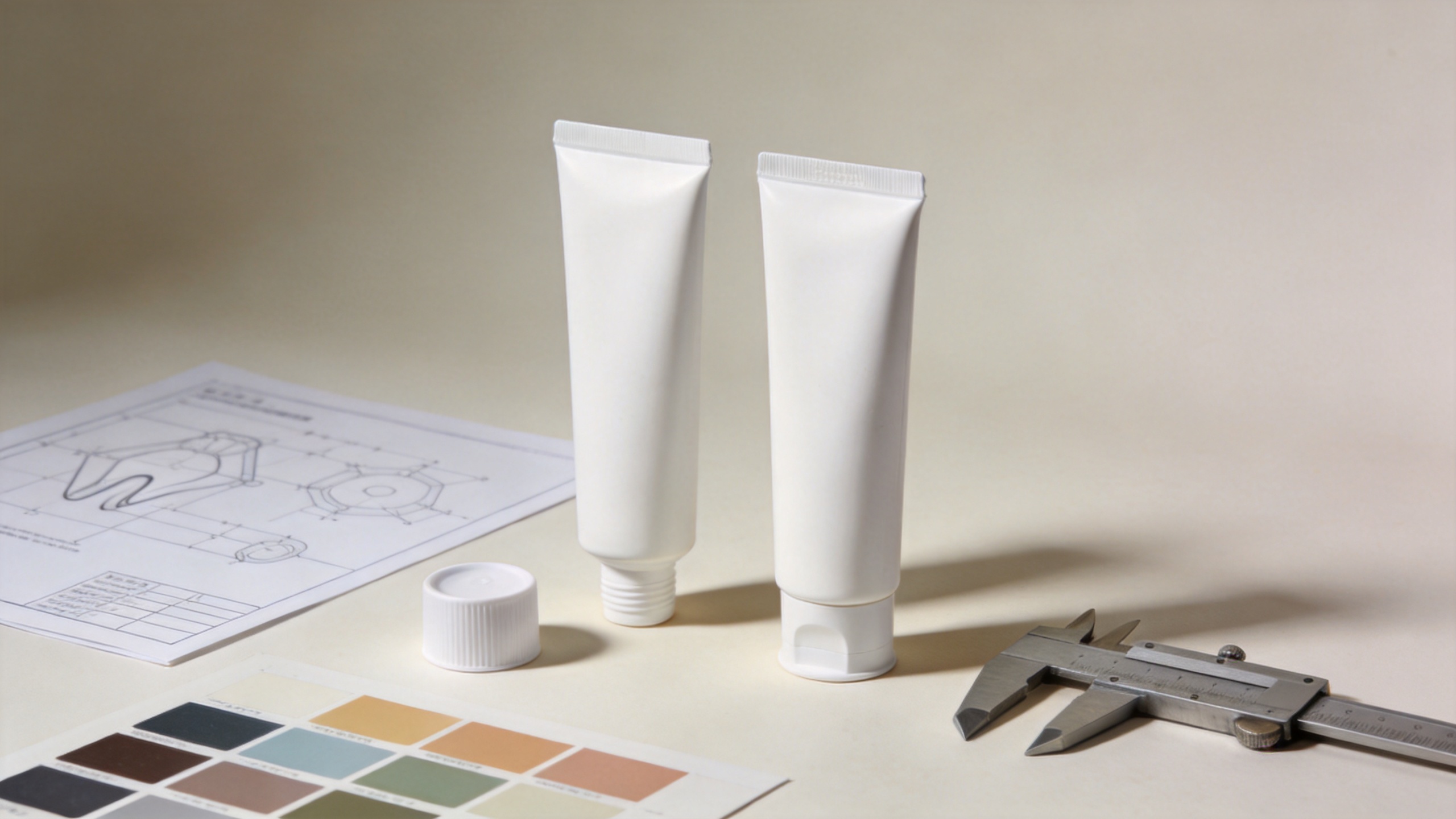
A complete specification for a toothpaste packaging tube normally covers tube structure, diameter, length, shoulder, nozzle, closure, decoration, and pack-out. The toothpaste packaging tube specification should be the single reference used by the brand, filler, and supplier. The volume alone is not enough. Two tubes with the same nominal fill can behave differently because their diameter, length, head shape, and shoulder geometry affect the usable fill, shelf presentation, and squeeze experience.
Barrier construction also belongs in the early toothpaste packaging tube discussion. Search evidence on tube packaging commonly distinguishes aluminum barrier laminate (ABL), plastic barrier laminate (PBL), and co-extruded structures as options with different protection and material characteristics. Use that distinction as a starting point for a conversation with the formula and packaging teams—not as a substitute for project-specific testing. If barrier protection is the priority, confirm the required protection criteria and the proposed structure before artwork is finalized.
Build a decision table before requesting samples
| Specification area | Questions to settle | Project output |
|---|---|---|
| Tube body | What diameter, length, laminate or plastic structure, and wall feel suit the fill and shelf format? | Dimensioned tube specification |
| Shoulder and nozzle | Will the opening support controlled dispensing and the planned cap style? | Neck/nozzle drawing or approved reference |
| Closure | Does the cap suit the product, user action, transport, and filling process? | Closure type and functional criteria |
| Decoration | Which colours, finish, print zones, and legal copy are required? | Artwork brief and print proof criteria |
| Secondary pack | How will the filled tube fit the carton, shipper, and retail presentation? | Pack-out specification |
3. Align the supplier conversation with real production inputs
Toothpaste packaging tube supplier communication moves faster when the brief is specific enough to quote, sample, and validate. Rather than asking only for a “custom toothpaste tube,” provide the desired volume range, dimensions if known, material or barrier preferences, cap concept, decoration requirements, expected order quantity, delivery market, and target timing. Leave uncertain items clearly marked as open decisions instead of presenting assumptions as approved requirements.
For a starting point in the product discussion, teams can review this custom printed ABL laminated toothpaste tube. The verified product listing identifies a toothpaste-tube format and multiple volume references; it should not be read as confirmation that any one structure, volume, or finish is right for a specific formula. Final selection still belongs to the approved project specification and samples.
For B2B teams working across regions, agree early on the working artwork files, colour reference process, responsibility for translations, and the definition of an approved master sample. These details reduce avoidable rework after printing or packing has begun.
4. Use samples as approval gates, not as a formality
A toothpaste packaging tube sample is where the original brief meets physical reality. The project team should review an unprinted or construction sample for dimensions and closure fit, then a decorated sample or proof for graphics and legibility. A pilot fill, when appropriate, allows the brand, filler, and packaging supplier to observe the tube with the actual product and intended operating conditions.
Compatibility studies generally examine how a formula behaves over time in contact with its packaging. The exact protocol, duration, and acceptance criteria must be set by the responsible technical and regulatory teams for the product and market. In practice, record what the team will check—such as leakage, deformation, odour change, print condition, cap function, and dispensing consistency—rather than relying on an informal verbal approval.
- Construction approval: verify dimensions, shoulder, nozzle, cap engagement, and intended use motion.
- Artwork approval: verify copy, colour reference, print position, barcode or code area, and mandatory information.
- Filled-sample review: assess the package with the real formula and filling process under the agreed test plan.
- Master-sample sign-off: retain a dated reference that links the approved tube to the purchase specification.
5. Lock production details before mass manufacturing
Once toothpaste packaging tube samples are accepted, convert the decisions into a production-ready document. Include revision-controlled artwork, material and construction description, tube dimensions, cap and nozzle details, fill-volume basis, inspection points, packing method, quantities, delivery terms, and approval contacts. If a change is requested after approval—such as a cap colour, material adjustment, or new print element—assess whether it affects sampling, compatibility, line operation, or the carton before treating it as a minor edit.
Quality-system references such as ISO 22716 are useful prompts to clarify how packaging materials, documentation, and incoming controls are managed. They are not a universal shortcut to compliance. Confirm the applicable requirements with the responsible manufacturer, regulatory team, and destination-market partners.
6. A practical final checklist for the toothpaste packaging tube buyer
- Is the toothpaste packaging tube product brief complete enough for the tube supplier and filler to review?
- Are tube structure, dimensions, nozzle, cap, decoration, and pack-out documented together?
- Have formula-contact and functional checks been assigned to the appropriate technical owners?
- Does the approved artwork match the market, language, and coding requirements?
- Is there a signed master sample and a controlled process for subsequent changes?
- Are quantities, lead-time assumptions, shipment packaging, and production approvals aligned before the purchase order?
Plan the toothpaste packaging tube decisions, then validate them
A strong toothpaste packaging tube project does not begin with a catalogue choice and end with a logo file. It moves through a disciplined chain: define the product need, specify the tube system, align supplier inputs, validate with samples, and lock the approved version for production. That approach gives brand and procurement teams a clearer basis for asking suppliers the right questions while keeping unverified claims out of the specification.
Baolilai works with B2B customers on custom tube-packaging discussions for personal-care applications. Share the product brief, desired format, artwork direction, and volume plan early so the next conversation can focus on the specifications that need confirmation.