
 EN

How to Select a Cosmetic Tube Manufacturer for Custom Makeup Packaging
Choosing a cosmetic tube manufacturer is not simply a sourcing exercise. For a makeup brand, the tube becomes part of the product experience: it frames color, supports the formula, carries required information, and has to look consistent after filling, shipping, and display. A useful supplier conversation therefore starts with the product brief rather than a request for a price alone.
This guide is written for brand teams, buyers, and OEM/ODM partners evaluating custom tubes for foundation, cream, skin care, and color cosmetics. The right cosmetic tube manufacturer should help turn a visual direction into a specification that the brand, filler, and purchasing team can all review.
Start with the cosmetic product and the brand position
Before comparing factories, define what the pack must do. Is the formula a high-viscosity cream, a fluid foundation, a primer, or a treatment product? Will it be displayed upright, transported through humid climates, or used with an applicator? A cosmetic tube manufacturer can discuss tube structures and decoration options, but the brand should provide the intended formula profile, fill volume, filling conditions, target markets, and desired shelf-life assumptions under appropriate confidentiality controls.
Then translate the brand position into visible choices. A matte surface may support a soft-touch or premium direction; a plated cap can add contrast; a flat or oval profile can change shelf presence and the usable print area. These choices should be checked against the actual product category, not selected only from a digital rendering. For custom makeup packaging, touch, color, seam appearance, and cap alignment deserve the same attention as the logo.
Compare materials by application, not by a trend label
A capable cosmetic tube manufacturer should explain the practical trade-offs among PE, laminate, aluminum-plastic, and other applicable tube constructions without making universal claims. The right choice depends on formula behavior, desired barrier performance, tactile effect, decoration route, recycling considerations, and local collection systems. If sustainability is part of the brief, ask what the claim means in the destination market and what evidence supports it. Design-for-recycling guidance for plastic squeeze tubes emphasizes that component compatibility can matter to existing recycling streams; it is not a shortcut to claiming that every finished pack is recyclable everywhere.
Ask for a material-and-component breakdown that includes the tube body, shoulder, cap, decoration layers, and any applicator or insert. This makes it easier to spot where a beautiful concept may create a verification issue later. A good cosmetic tube manufacturer will also state which choices need confirmation through samples or third-party testing rather than presenting a preliminary discussion as an approval.
Evaluate cosmetic tube printing as a controlled production process
Cosmetic tube printing is where brand intent meets process control. Share the artwork version, color references, required text, barcode area, finish expectations, and the priority between visual impact and tolerance. Do not assume that a large digital file automatically fits a curved, limited tube surface. Ask the supplier to identify the printable area, seam or registration considerations, small-text limits, and how artwork revisions will be controlled.
When reviewing cosmetic tube printing, compare physical samples under relevant lighting rather than approving only a screen proof. The sample should make it possible to evaluate legibility, color variation, abrasion risk, and the interaction between print, matte treatment, metallized effects, and cap finish. A transparent version-control process is especially valuable when design, procurement, and filling teams are based in different locations.
Check the tube, cap, and filling system together
A visually strong tube can still become an unsuitable commercial pack if it does not work with the formula or filling line. During supplier screening, ask how the cosmetic tube manufacturer will support communication around diameter, length, shoulder, orifice, cap style, inner plug, and expected dispensing behavior. This is not a request for unsupported performance guarantees; it is a way to ensure that the correct technical questions are documented early.
Package compatibility reviews commonly assess the final formula and its contact materials under defined real-time and accelerated conditions. Teams may look for changes such as swelling, softening, cracking, corrosion, tack, residue, or changes in the formula itself. The responsible brand, technical team, and filler must approve the final system, while the cosmetic tube manufacturer can provide samples, drawings, and component information needed for the review.
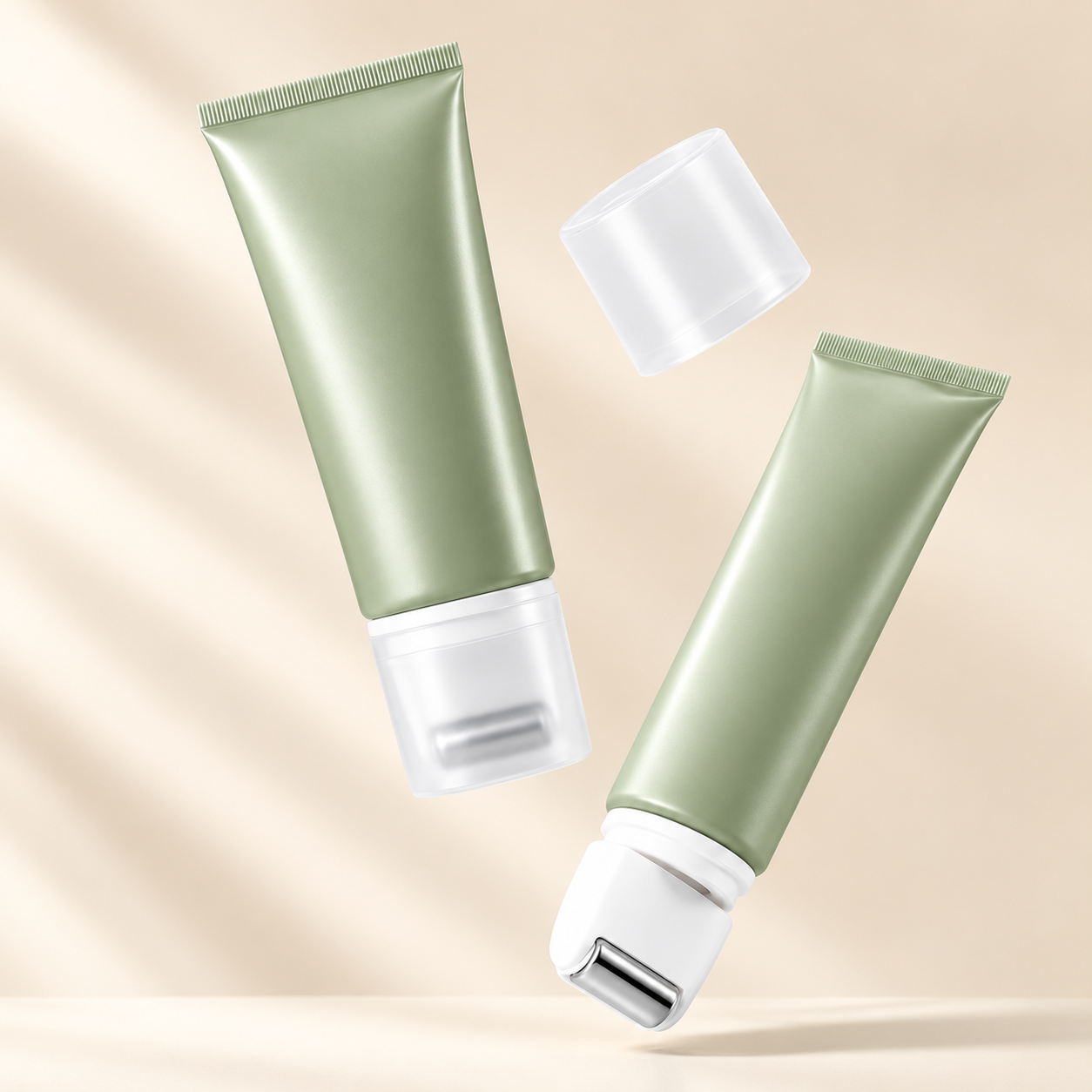 Review materials, decoration, and specifications together before sample approval.
Use samples to test what a quotation cannot show
Samples are the fastest way to distinguish a responsive cosmetic tube manufacturer from one that only offers a broad catalogue. Request samples that represent the intended material family, approximate dimensions, cap style, decoration level, and, where possible, the planned filling conditions. Establish a simple acceptance sheet before the sample arrives so feedback does not become subjective or fragmented.
| Checkpoint | What to confirm |
|---|---|
| Appearance | Color, gloss or matte feel, print placement, seam visibility, and cap alignment. |
| Specification | Volume target, dimensions, neck and closure details, artwork revision, and component list. |
| Use and filling | Dispensing expectation, orientation, filling temperature or process questions, and formula-package review plan. |
| Production readiness | Approved sample reference, inspection points, packaging protection, and change-control contacts. |
This approach also improves cosmetic tube printing approval because the visual standard is documented before a larger order is released.
Assess manufacturing communication and consistency
A cosmetic tube manufacturer should be evaluated on the quality of the information they request as well as the information they provide. Clear questions about artwork, capacity, finish, closure, formula context, sampling, and delivery protection usually indicate a more manageable development process. For overseas sourcing, confirm how specification changes are recorded, who approves them, and which sample or document serves as the production reference.
It is also reasonable to ask how the factory handles batch-to-batch appearance checks, surface scuffing concerns, packing protection, and nonconformance communication. Avoid asking a supplier to promise zero variation. Instead, ask them to explain the inspection points, acceptance communication, and escalation route. That gives the purchasing team a realistic way to compare a cosmetic tube manufacturer before placing a production order.
Review a relevant product example without assuming unverified specifications
For brands considering a flat tube with a plated screw cap for foundation, makeup, or skin-care positioning, this aluminum-plastic packaging squeeze tube with a flat profile and plating screw cover provides a useful starting point for discussing shape and visual direction. The product page should be treated as a category reference; final dimensions, materials, decoration, compatibility, and order terms still need to be confirmed for the individual project.
A practical supplier-selection checklist
- Does the cosmetic tube manufacturer understand the intended formula, application, and target market?
- Can they document the body, closure, decoration, and relevant specification choices clearly?
- Is the cosmetic tube printing process supported by artwork controls and physical sample approval?
- Are sampling, formula-package review, and filling questions assigned to the right stakeholders?
- Is there an agreed production reference and a clear route for handling changes or quality feedback?
The strongest choice is rarely the supplier with the longest feature list. It is the cosmetic tube manufacturer that can support a disciplined sequence: define the brief, align the specification, review a representative sample, complete the needed validation, and release a controlled production reference. That sequence helps custom makeup packaging protect both the brand experience and the purchasing decision.