
 EN

How to Source Aluminum Collapsible Tubes for Cosmetic Packaging
For a cosmetics brand, an aluminum tube is more than a container. It affects how a cream, primer, mask, balm, or treatment looks on shelf, how the pack feels in hand, and how clearly a buyer can control specifications across design, filling, and repeat orders. When sourcing aluminum collapsible tubes, the useful question is not simply “What size do we need?” It is “What tube construction, finish, closure, and approval process fit this formula and launch plan?”
This guide is written for brand teams, OEM/ODM manufacturers, and packaging buyers comparing aluminum collapsible tubes for color cosmetics and skin-care applications. It focuses on the decisions that should be settled before a production order: material construction, dimensions, decoration, compatibility, sampling, and supplier communication.
Start by defining the pack’s job
Before requesting quotations for aluminum collapsible tubes, define the product category, target fill weight, retail positioning, dispensing experience, and expected distribution conditions. A rich cream may need a different orifice and shoulder arrangement from a low-viscosity base product. A premium makeup line may prioritize a metallic visual language, while a high-turnover personal-care item may place more weight on repeatable printing and efficient filling.
Keep “aluminum tube” precise in the brief. Some projects use all-aluminum collapsible tubes; others use aluminum-plastic laminate structures or plated visual effects. These constructions can look similar in a render yet differ in flexibility, barrier behavior, decoration options, and production controls. Ask the supplier to state the tube body material, internal coating or lacquer system, shoulder material, cap material, and decoration process in writing.
Compare material construction with formula and filling conditions
Aluminum collapsible tubes are chosen when brands value a tactile metal presentation and a tube that collapses as product is dispensed. For cosmetics, the decision should also include a practical compatibility discussion. The formula, fragrance components, pigments, oils, pH range, filling temperature, and intended shelf-life conditions can all affect the type of internal protection that must be evaluated.
Do not treat a generic material statement as a compatibility result. Provide a representative formula or an agreed testing protocol, then ask what will be checked on finished samples. A useful record lists the sample code, fill condition, observation period, visual checks, leakage checks, closure condition, and the person responsible for approval. Where a buyer uses functional-quality requirements or a standard-based inspection plan, both parties should agree which tests are relevant to the project rather than assuming compliance from a product photo.
Turn capacity into a complete dimensional specification
Search results for cosmetic aluminum tubes commonly show nominal capacities from small trial sizes through roughly 125 ml. That range is useful for early screening, but it is not a purchase specification. Actual fill volume depends on tube diameter, body length, shoulder geometry, product density, headspace, and the filling process.
For each candidate among the aluminum collapsible tubes, request a specification sheet that covers:
- Nominal volume and target fill weight, with the formula density assumption stated.
- Tube diameter, body length, shoulder profile, neck finish, and orifice size.
- Cap style and material, including whether a screw cap, flip-top, applicator, or other dispensing component is planned.
- Internal coating system and the items to be confirmed during formula compatibility testing.
- Filling direction, sealing or crimping method, and any required line trials.
- Permitted tolerances, artwork area, barcode position, and batch-code location.
This converts a broad request for aluminum collapsible tubes into a document that purchasing, design, and filling teams can review together. It also reduces the common problem of approving a visual sample while the production team is still missing the closure or sealing details.
Plan the exterior: finish, artwork, and shelf read
For cosmetic packaging, the outside of the tube carries a large part of the brand experience. Define the desired surface before artwork is finalized: metallic exposure, plated appearance, matte or gloss impression, color coverage, and the handling marks that the project should assess. A digital render is useful for direction, but physical samples are the right place to review color, print registration, legibility, seam appearance, and the interaction between the cap and tube finish.
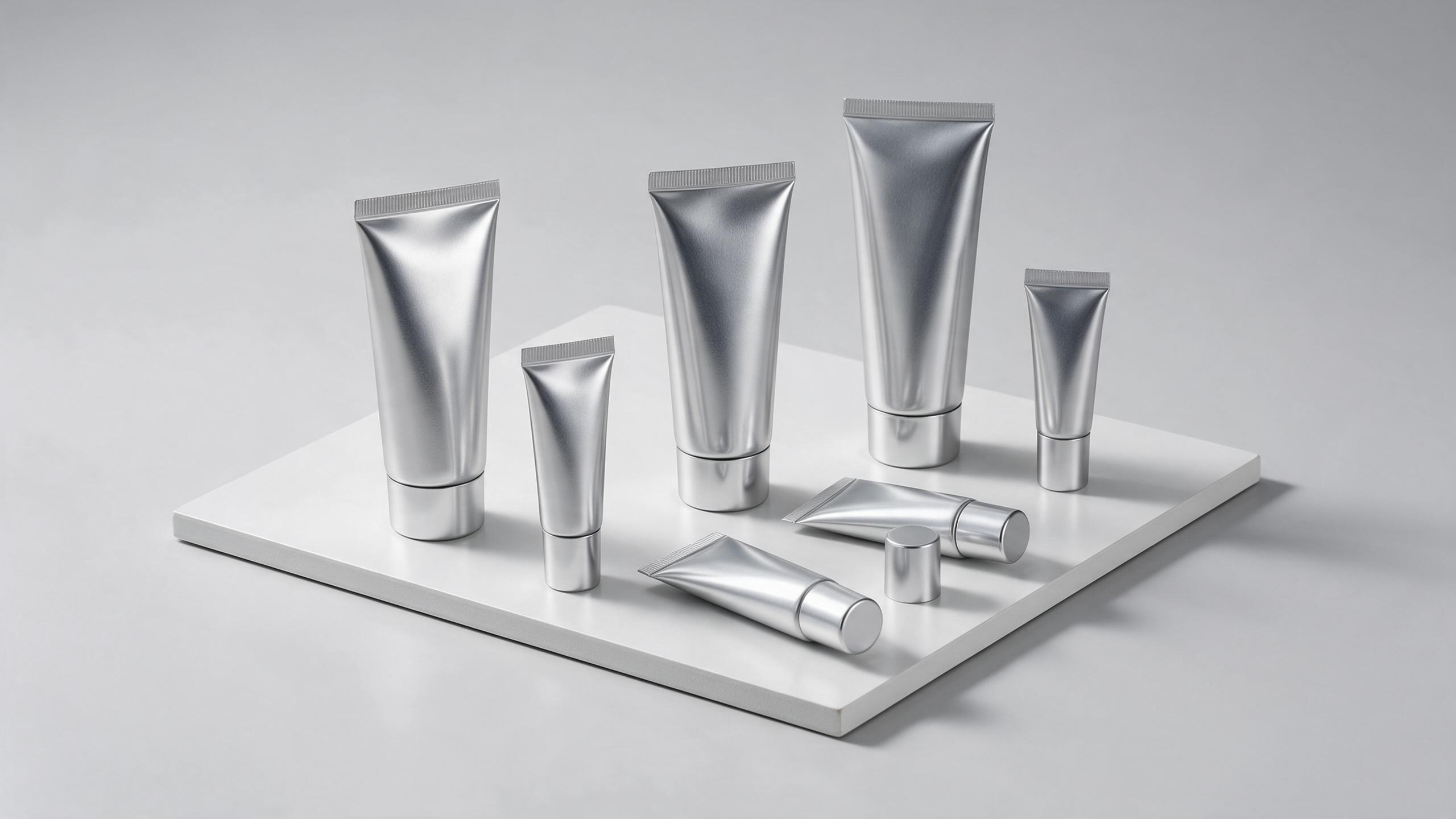
Build a version-controlled artwork checklist. It should identify the approved dieline, color references, legal copy, required languages, barcode area, logo clearance, and the final proof owner. If the brief is crowded, decide which information must remain visible at normal viewing distance. This is especially important for aluminum tubes for cosmetics, where a compact format can limit the printable panel.
Use samples to validate the full package, not a single feature
A sourcing decision is stronger when the sample review follows the actual product journey. Request samples that let the team check the tube on its own and, where possible, after filling. Review the cap fit, opening and closing feel, dispensing control, print appearance, surface scuffing, and the condition of the tube after handling and transport simulation appropriate to the project.
For color cosmetics, include the component that touches or dispenses the product when applicable. For skin care, include the intended filling and sealing route. Record observations in one shared approval sheet so that the brand, buyer, and contract filler do not work from different versions of the specification. This approach makes sample approval a decision gate rather than an informal visual check.
Assess the supplier’s communication process
At the decision stage, compare not only quoted price and minimum order quantity but also how a supplier turns your brief into a traceable project. Useful signs include clear questions about formula and filling, a structured dimensional drawing, an artwork confirmation route, sample checkpoints, and a defined process for changes after approval.
Baolilai works with cosmetic, skin-care, personal-care, and makeup packaging projects where buyers need to coordinate size and printing requirements. For a project that uses an aluminum-plastic construction and a plated screw-cap appearance, you can review the confirmed product format here: aluminum-plastic cosmetic squeeze tube. Treat the product page as a starting point for a specification conversation; validate the exact material, finish, closure, and formula conditions for your own project.
A buyer’s inquiry checklist for aluminum collapsible tubes
Send the following information together when requesting quotations for aluminum collapsible tubes:
- Product category, formula description, target fill weight, and expected filling method.
- Preferred tube construction and any internal coating or compatibility questions.
- Target diameter, length, shoulder and neck preferences, plus the required orifice or applicator.
- Cap type, color, finish, and any tamper-evidence or sealing expectations.
- Artwork files or design direction, print colors, finish references, and mandatory information.
- Sample quantity, approval criteria, expected order quantity, delivery destination, and timing.
Clear inputs help a supplier identify open questions early. They also make it easier to compare quotations on the same basis rather than comparing superficially similar tubes with different construction or decoration assumptions.
Make the final decision with a controlled approval path
The right aluminum collapsible tubes for a cosmetic project are the ones that meet the agreed formula, functionality, appearance, and supply requirements together. Move from brief to drawing, from drawing to physical sample, and from sample to documented approval. Keep the approved artwork, dimensional sheet, material statement, and sample record linked to the purchase order.
That discipline protects the packaging concept while making future reorders easier to manage. It gives brands a practical basis for discussing custom aluminum tubes for cosmetics with suppliers, and it keeps every stakeholder focused on verifiable project details rather than assumptions.