
 EN

Squeeze Tube Containers: How Brands Match Tube Format to Product Viscosity
Choosing a squeeze tube container is not simply a capacity or decoration decision. For a skincare, personal-care, or color-cosmetics brand, the way a formula moves through a tube shapes the user experience, the filling conversation, and the sample-approval plan. A light lotion, a serum-gel, a dense cream, and a paste-like treatment can all sit in a tube, but they do not ask for the same tube body, opening, cap, or applicator.
From a packaging-solution perspective, a useful starting point is to match the formula, brand position, and filling method before choosing the visual finish. This is especially relevant for B2B buyers comparing custom tubes: an attractive mock-up may look settled, yet the dispensing action still needs to work with the final formula and the intended use. The practical question is not “Which tube looks right?” but “Which squeeze tube container configuration gives the formula a controlled, repeatable route from filling line to end user?”
Start with viscosity, but do not stop there
Viscosity is the first sorting tool because it affects the force needed to dispense a product. As a working rule, lower-viscosity lotions and fluid gels may need more control at the outlet, while higher-viscosity creams, balms, scrubs, or pastes may need a tube and outlet that allow product to move without excessive squeezing. However, viscosity alone does not determine the answer. Formula texture can change with temperature, suspended particles can affect flow, and the desired dose may be smaller than the tube opening would suggest.
In practice, the dispensing behavior of a squeeze tube container comes from the relationship among formula viscosity, tube-body flexibility, shoulder geometry, orifice size, and the closure or applicator. Treat these as a system. A wide opening may feel efficient for a thick cream but can release too much of a fluid product; a narrow outlet can improve dose control but may feel restrictive with a dense formula. That is why a preliminary viscosity category should lead to a physical dispensing test, not replace it.
Compare tube formats by the dispensing job
At this stage, the phrase squeeze tube container should refer to the complete dispensing system, not just the tube shell. A brand team can use that framing to keep the tube, outlet, closure, and use routine in the same review.
| Formula behavior | Packaging priority | Tube-format questions to confirm |
|---|---|---|
| Fluid lotion or runny gel | Controlled dose and clean closure area | Would a smaller orifice, flip-top cap, or dispensing insert help limit over-dispensing? |
| Medium-viscosity cream or gel-cream | Balanced squeeze force and everyday usability | Does the tube recover well after squeezing, and does the outlet provide the intended amount per use? |
| Dense cream, balm, or paste | Comfortable product flow and sufficient outlet area | Is the tube body flexible enough, and does the orifice avoid frustrating resistance or product build-up? |
| Targeted or applicator-led formula | Placement accuracy and component fit | Should the closure be paired with a narrow nozzle, massage tip, brush, or other applicator after compatibility checks? |
This comparison is a selection framework rather than a universal specification. A thick product does not automatically require the widest outlet, and a thin formula does not automatically require the smallest one. Product dose, application area, consumer handling, and the look of the package all influence the final decision.
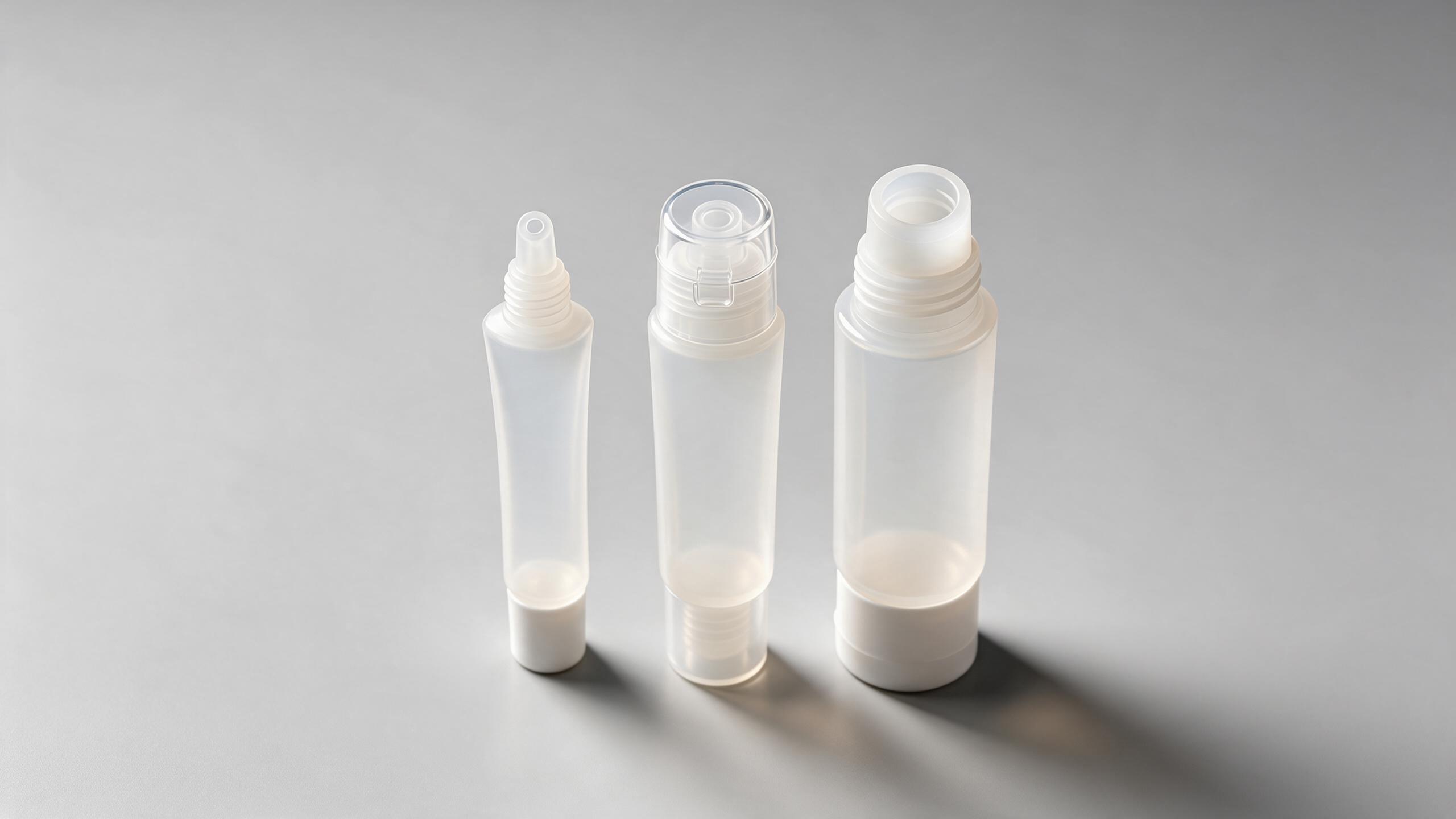
Match the tube body to the expected squeeze force
When a squeeze tube container is compared across suppliers, ask for samples with comparable tube-body feel rather than comparing decoration samples alone. This makes the squeeze-force discussion more concrete.
The tube body is part of the dispensing mechanism. A more flexible body can make a high-viscosity formula easier to express, while a firmer body may support a more controlled feel for formulas that flow readily. For a squeeze tube container used in personal care, buyers should discuss wall feel, recovery after squeezing, and how the package behaves late in use when little product remains.
It is easy to focus first on a matte surface, printed artwork, or capacity. Those elements matter for shelf presentation, but they should follow the dispensing decision. A common specification mistake is confirming the size and artwork without confirming the relationship between the formula and the closure system. The better sequence is: establish formula behavior, compare outlet and cap choices, check tube-body feel, then lock the visual treatment and print layout.
Use the closure and applicator to control the experience
For each squeeze tube container option, define whether the priority is a measured dose, a broad spread, a targeted application, or a clean reseal. That choice directs the closure review.
A closure does more than protect the opening. It can shape the dosage, cleanliness, opening motion, and perceived value of the package. Flip-top caps are often considered where one-handed use and quick resealing are important. Screw caps can suit products that benefit from a more deliberate opening action. Nozzles or applicators may be relevant when a formula must be placed precisely, but their fit and flow behavior should be checked with the actual formula rather than assumed from drawings.
For brands developing a customizable format, the available product reference is a 15–60 ml custom PE tube packaging option for skincare, makeup, sunscreen, face cream, and lotion. Its confirmed product categories and capacity range can help frame an initial supplier discussion. They do not, by themselves, confirm suitability for a particular formula; the cap, orifice, material, filling conditions, and final formula still need project-specific review.
Build sample validation into the purchasing process
A squeeze tube container sample should be evaluated as a functional assembly. It is more useful to review product flow, closure fit, and visual condition together than to sign off on each element in isolation.
For buyers comparing options, sampling is where a promising packaging idea becomes a usable specification. Request samples that are as close as practical to the intended tube, closure, decoration, and filling set-up. Then evaluate them with the final or production-representative formula under defined handling and storage conditions. The goal is to observe the package as a system, including seal behavior and dispensing performance, rather than merely approve appearance.
A practical supplier checklist
- State the formula category, expected viscosity range, and whether particles or actives may affect flow.
- Confirm capacity, tube diameter and length, plus the intended product dose per use.
- Compare orifice, cap, nozzle, or applicator options against the desired dispensing action.
- Clarify the filling process and any conditions the supplier needs to assess the tube configuration.
- Review leakage, closure fit, squeeze feel, residual product, and package appearance after handling tests.
- Keep artwork, dimensions, and approved sample versions aligned before moving to batch production.
Choose a format that supports the whole brand brief
A squeeze tube container brief is strongest when it describes both what the formula needs to do and how the customer should experience it. This gives procurement and product-development teams a shared basis for comparison.
The right squeeze tube container is rarely chosen by viscosity alone. It should support the formula’s flow behavior, the intended application action, the brand’s visual direction, filling requirements, and the realities of repeat production. When those factors are considered together, the team can make more useful trade-offs: a smaller opening may improve control, a softer body may reduce effort, and a different closure may improve hygiene or placement.
For custom tube projects, give the supplier a concise briefing package: formula type, viscosity behavior, capacity, dispensing goal, target market, decoration direction, filling information, and validation criteria. This creates a clearer basis for comparing options and helps keep important specifications from being left until after quotation. Use viscosity to open the conversation, then confirm the complete squeeze tube container system with representative samples.